
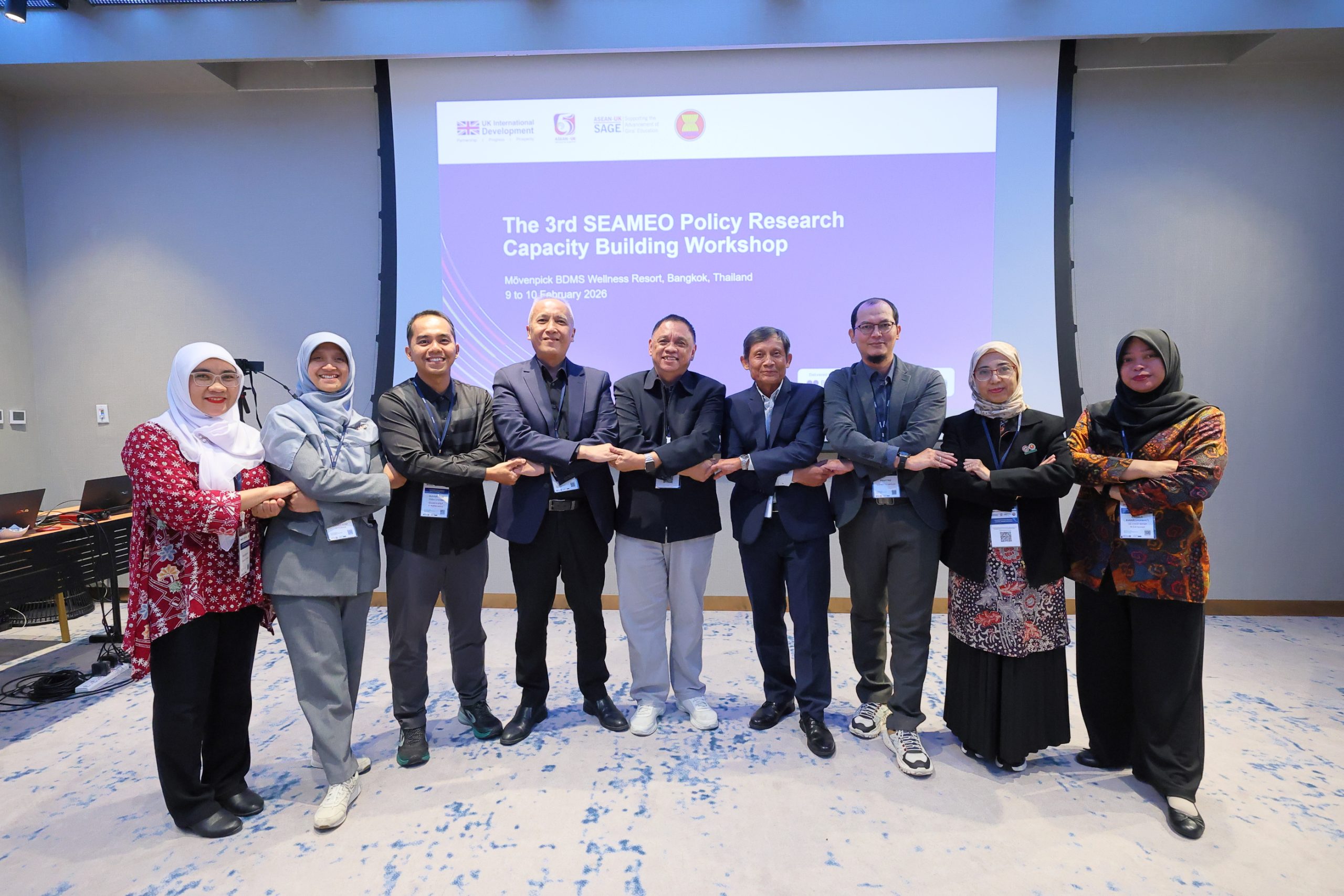
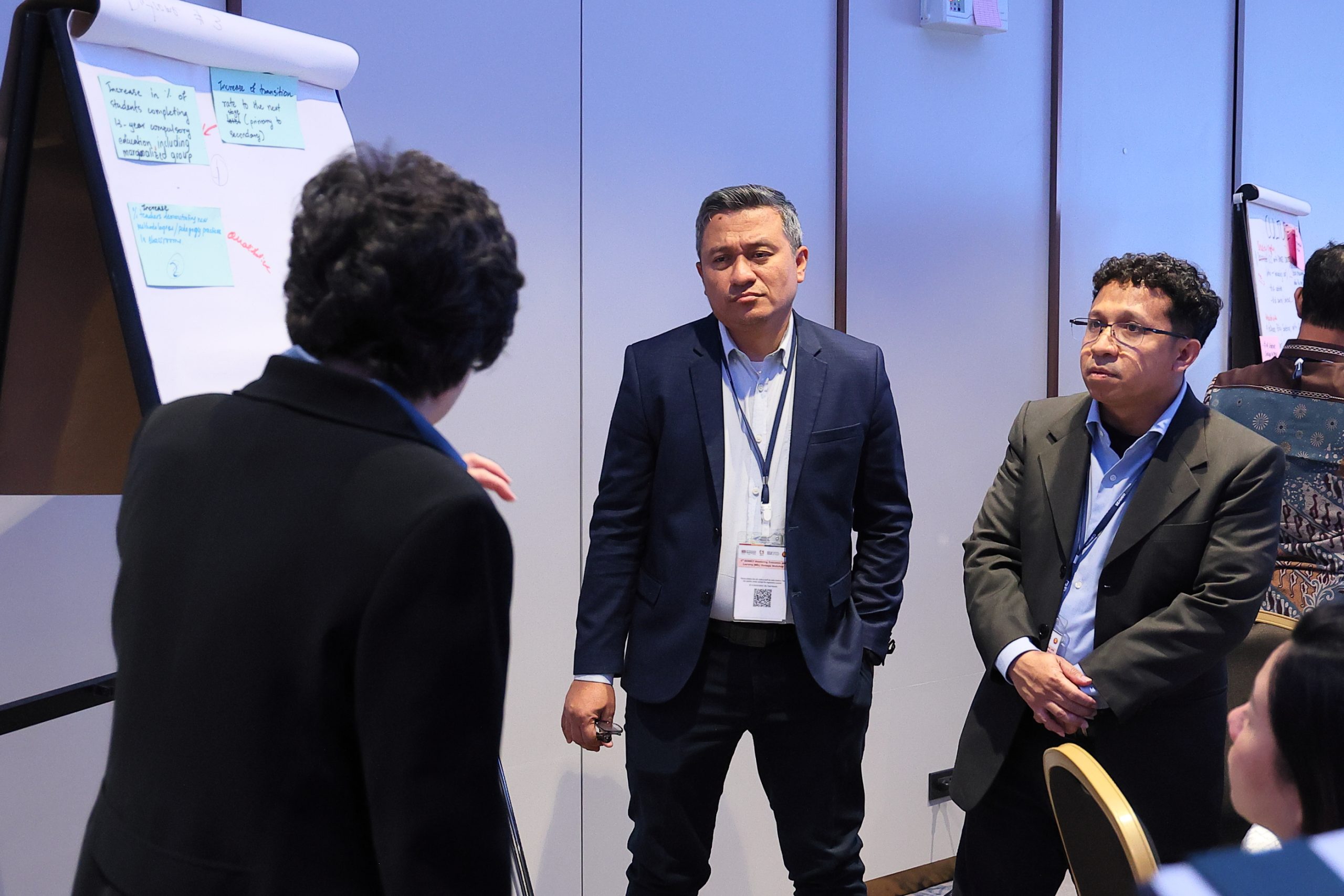
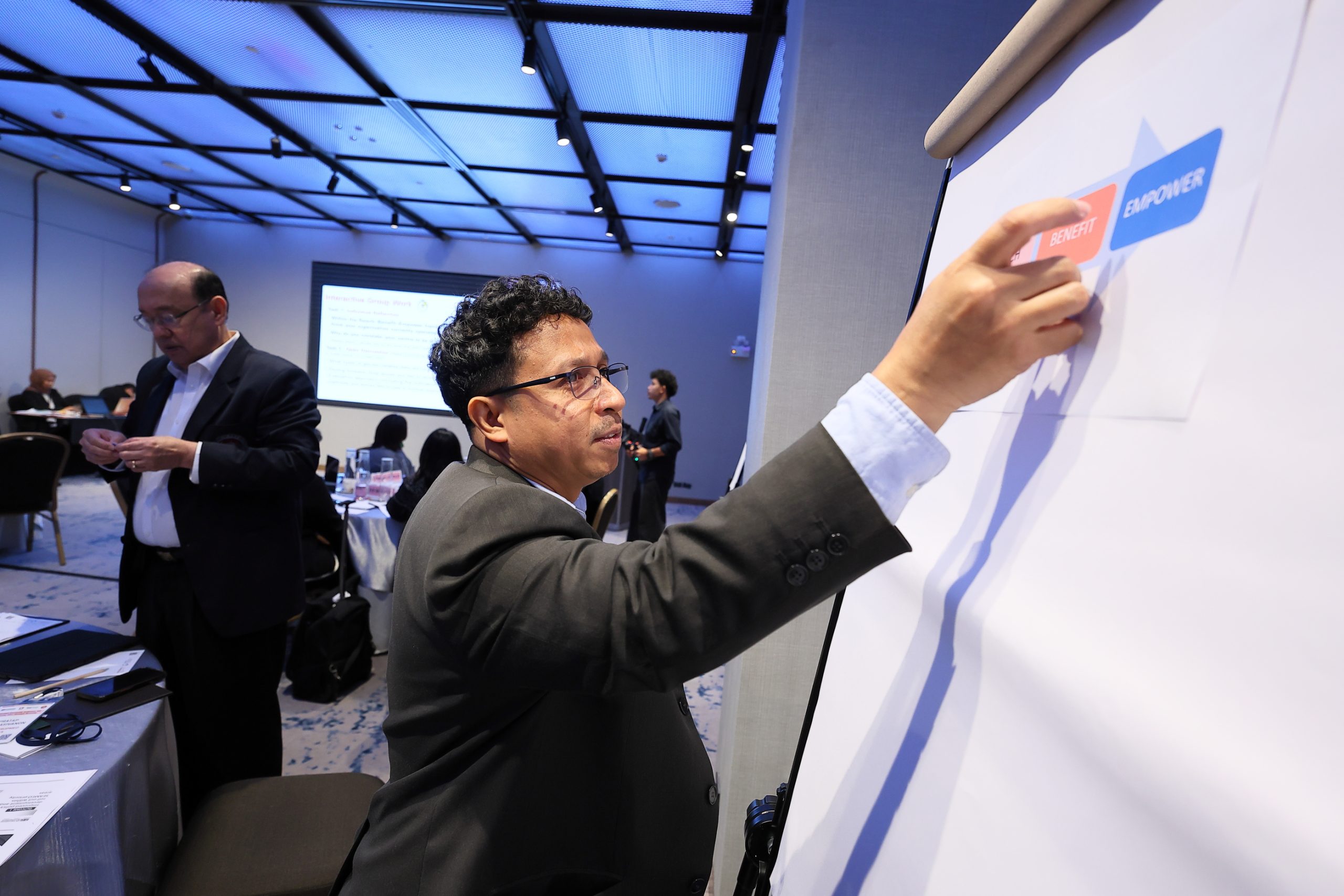
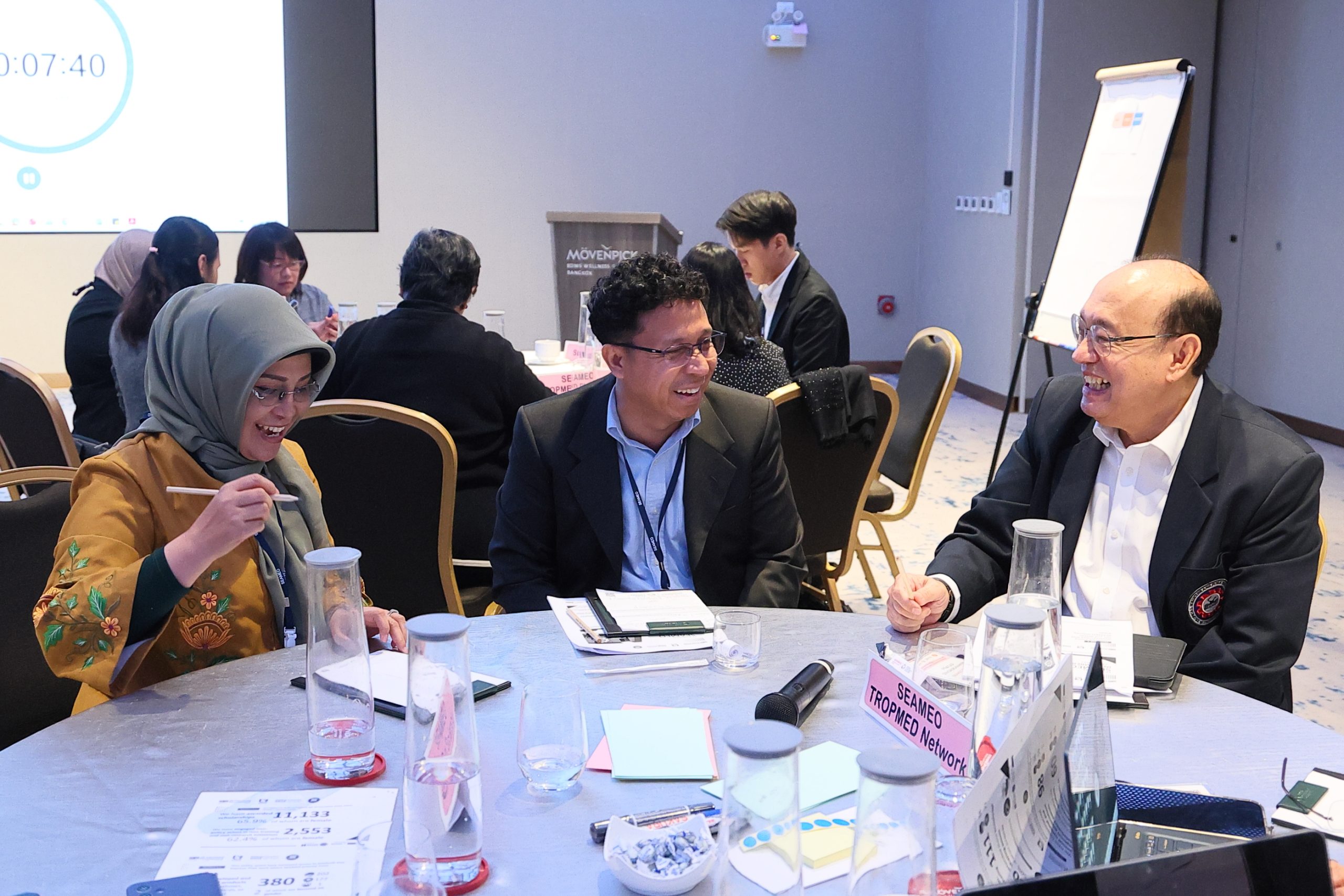
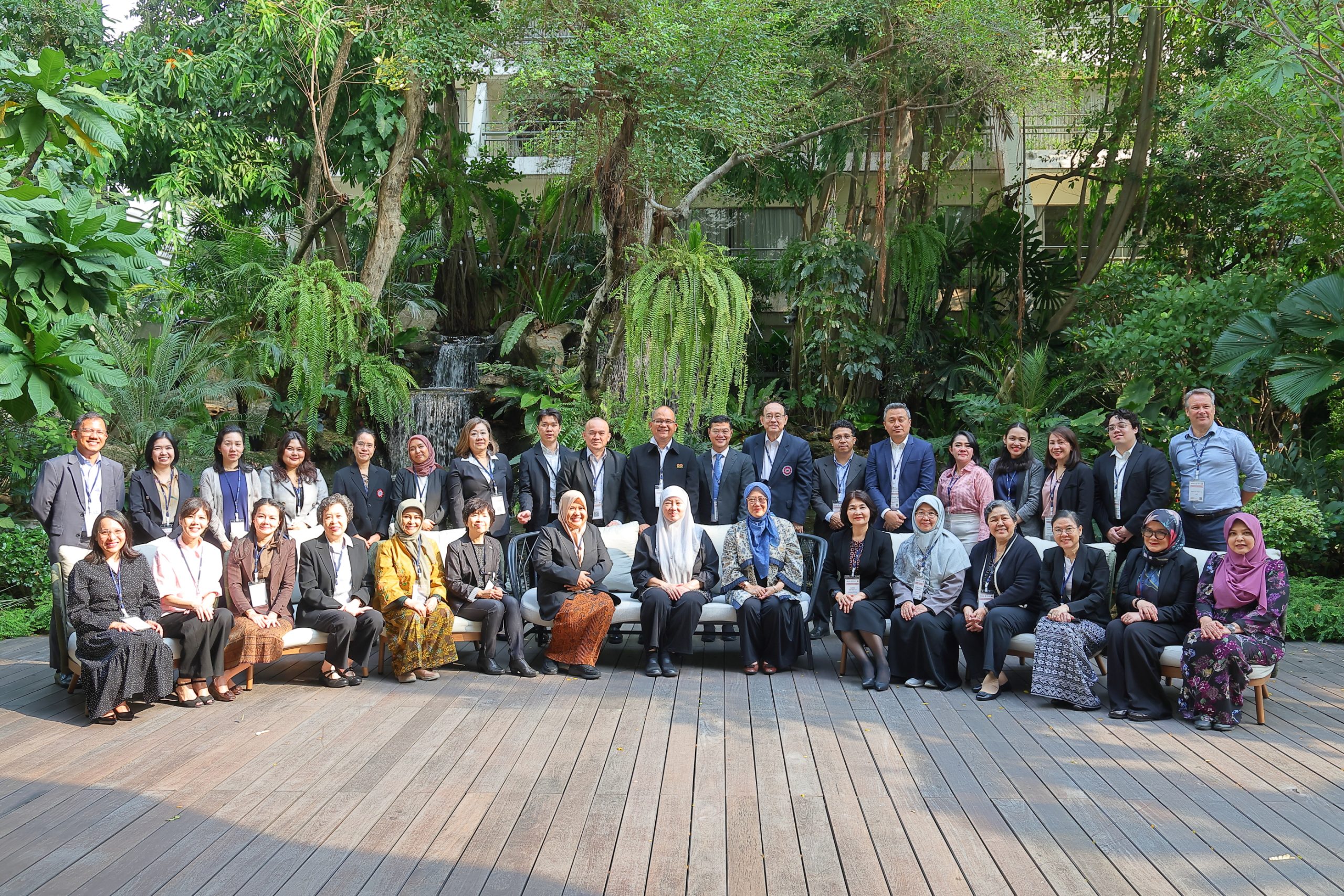
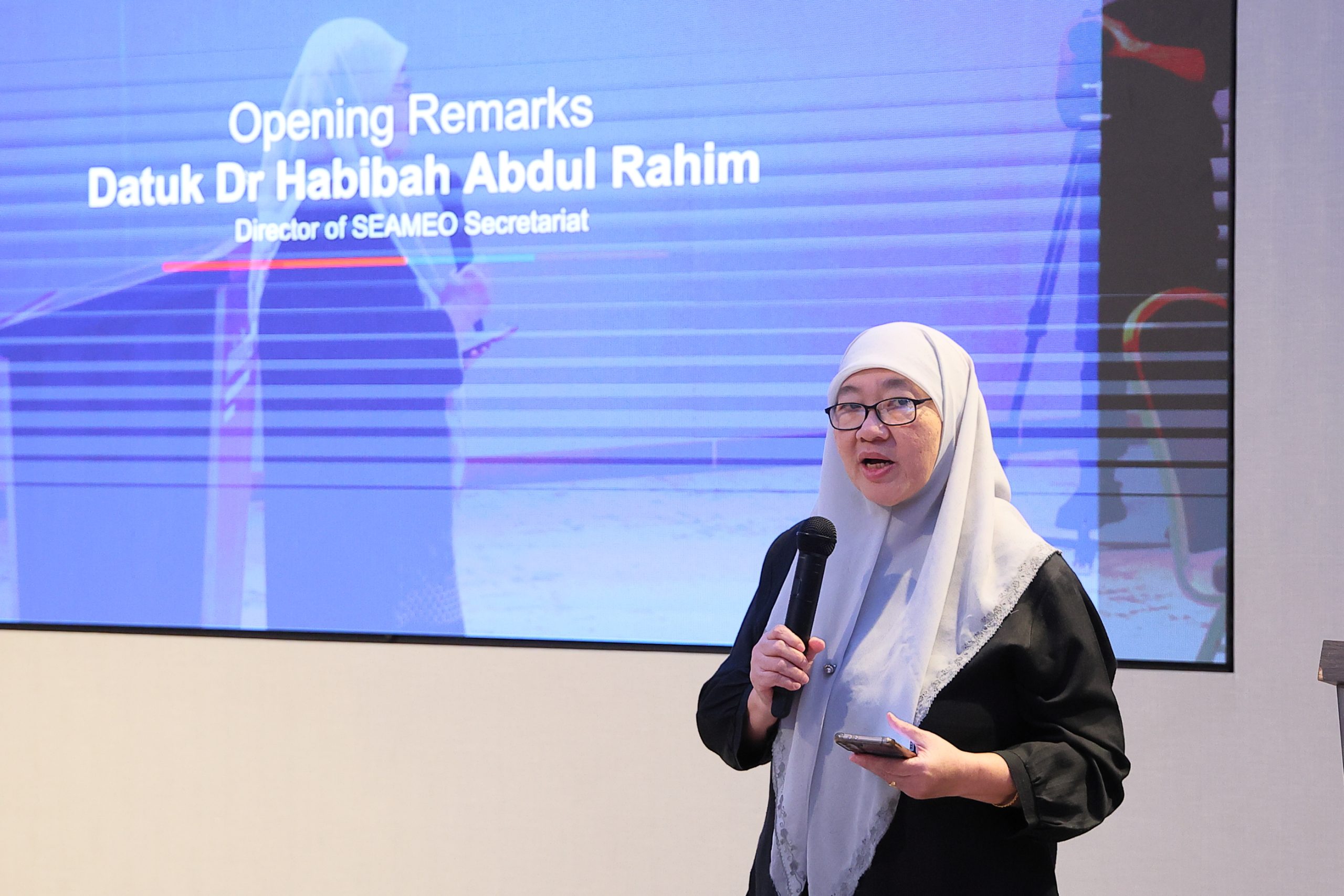
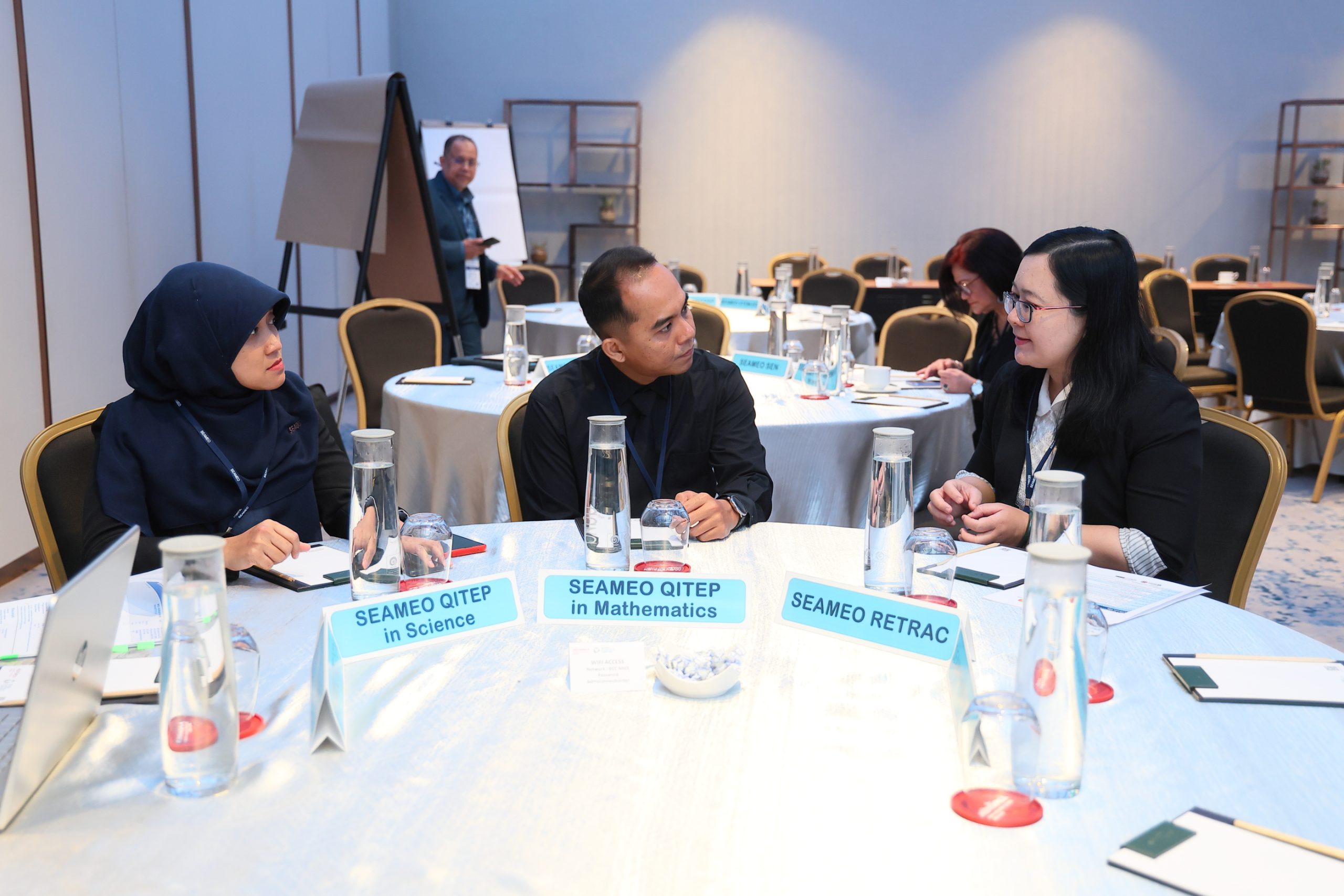
Bangkok, Thailand — SEAQIS actively contributed to two major regional capacity-building events organised by the SEAMEO Secretariat (SEAMES), held on 9–10 February 2026 at the Mövenpick BDMS Wellness Resort, Bangkok, Thailand.
The events comprised the 5th Monitoring, Evaluation, and Learning (MEL) Strategic Workshop and the 3rd SEAMEO Policy Research Capacity Building Workshop, both designed to strengthen the capacity of SEAMEO Centres to implement results-based programming and translate research findings into actionable policy recommendations for Southeast Asia.
Strengthening MEL for Continuous Quality Improvement
One of the key activities was the 5th Monitoring, Evaluation, and Learning (MEL) Strategic Workshop, which focused on reviewing and strengthening SEAMEO’s existing MEL processes.
The workshop highlighted the importance of improving alignment between Outcomes, Outputs, and Output Indicators, and of clarifying how these elements contribute to long-term impact and the achievement of the SDGs 2030 Agenda.
SEAQIS was represented by Dr Apriyagung, Deputy Director for Programme, who took part in technical discussions on enhancing impact measurement, integrating qualitative and quantitative evidence, and ensuring that MEL functions as a continuous cycle of learning and quality improvement.
Participants also examined the importance of applying a gender lens within MEL, including the use of gender indicators and disaggregated data to support inclusive and sustainable programme development.
In parallel, SEAQIS participated in the 3rd SEAMEO Policy Research Capacity Building Workshop, which provided guidance on translating research outputs into concise and influential policy briefs for decision-makers.
Ms Lintang Ratri Prastika, Head of the Research and Development Division, represented SEAQIS in sessions covering the essential components of policy brief writing, identifying key insights from evidence through the “So What?” test, and formulating SMART recommendations that are feasible and actionable for policymakers.
The workshop also introduced participants to AI-supported tools such as NotebookLM to assist in drafting policy briefs and strengthening policy communication.
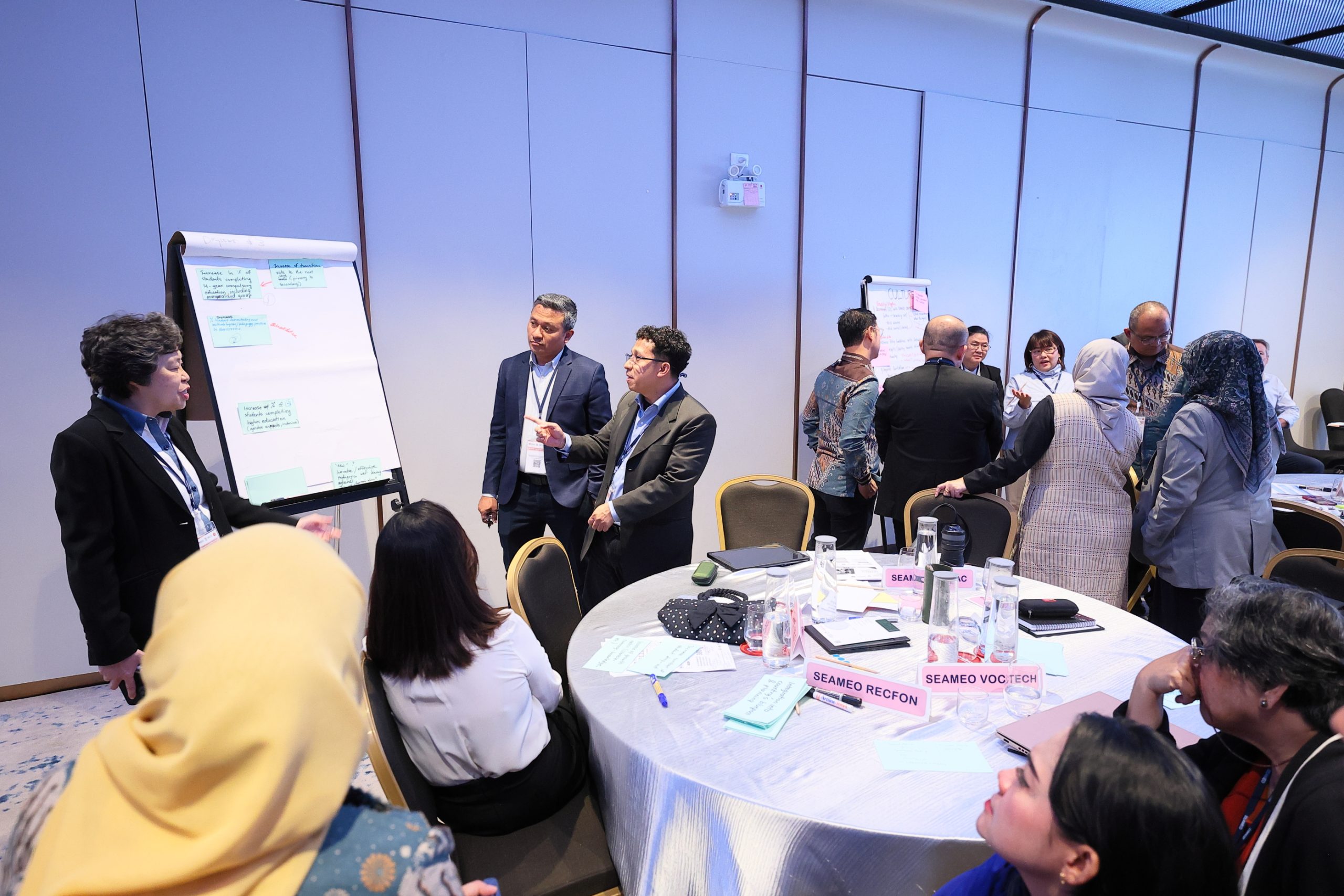
Both workshops adopted participatory and hands-on learning approaches, including expert presentations, group discussions with peer feedback, poster sessions and gallery walk activities, as well as individual assignments to draft and refine policy briefs. These activities fostered stronger collaboration among SEAMEO Centres while ensuring that each participant produced practical outputs aligned with their respective institutional expertise.
The workshops concluded with agreed follow-up milestones, including the submission and refinement of policy briefs throughout 2026, leading to broader dissemination at the CPRN Summit and forthcoming SEAMEO meetings.
Through its active engagement in these strategic regional initiatives, SEAQIS continues to strengthen MEL implementation and advance evidence-based policy recommendations that contribute to sustainable educational development across Southeast Asia.
Written by Lintang Ratri Prastika
