
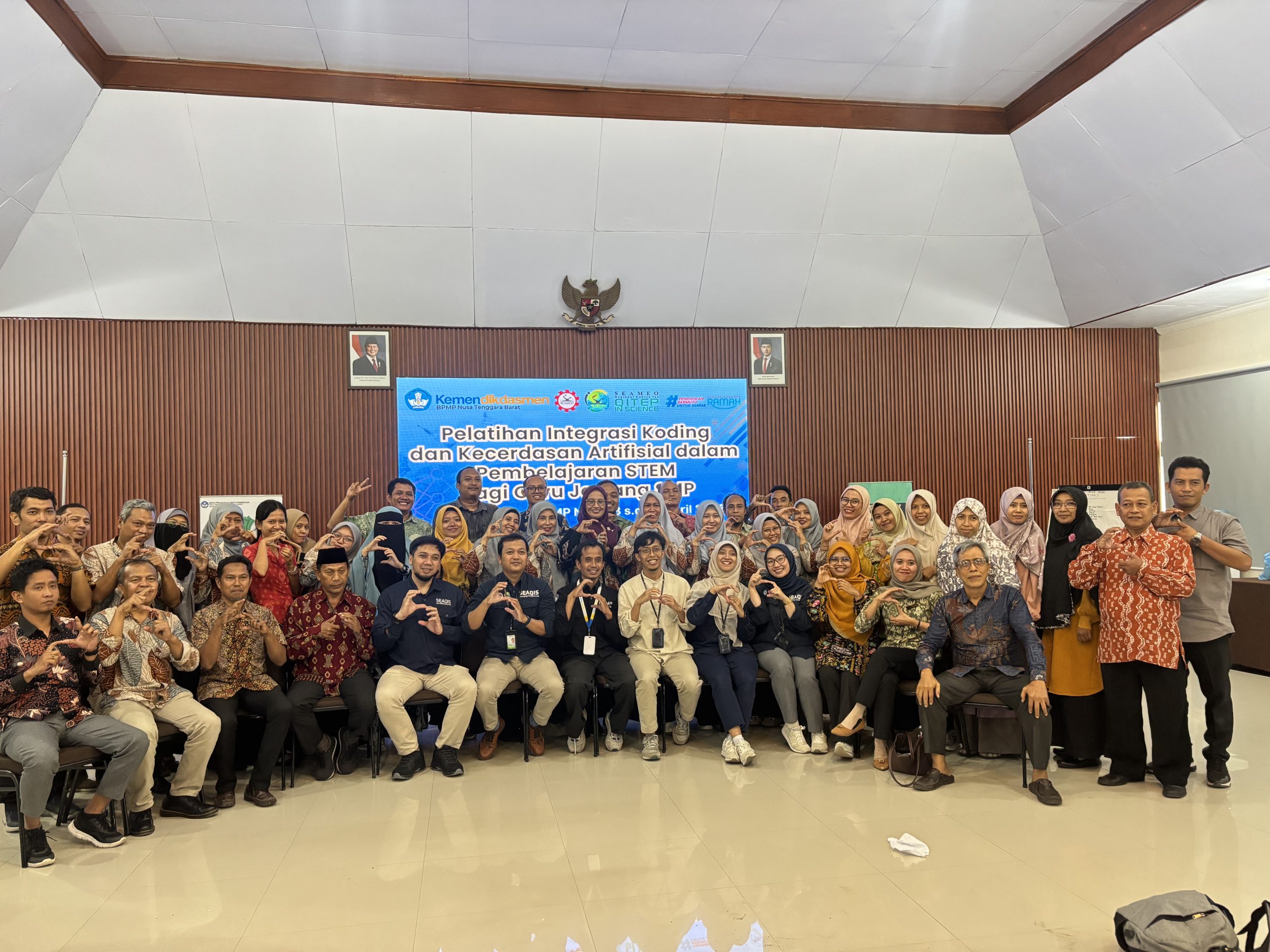
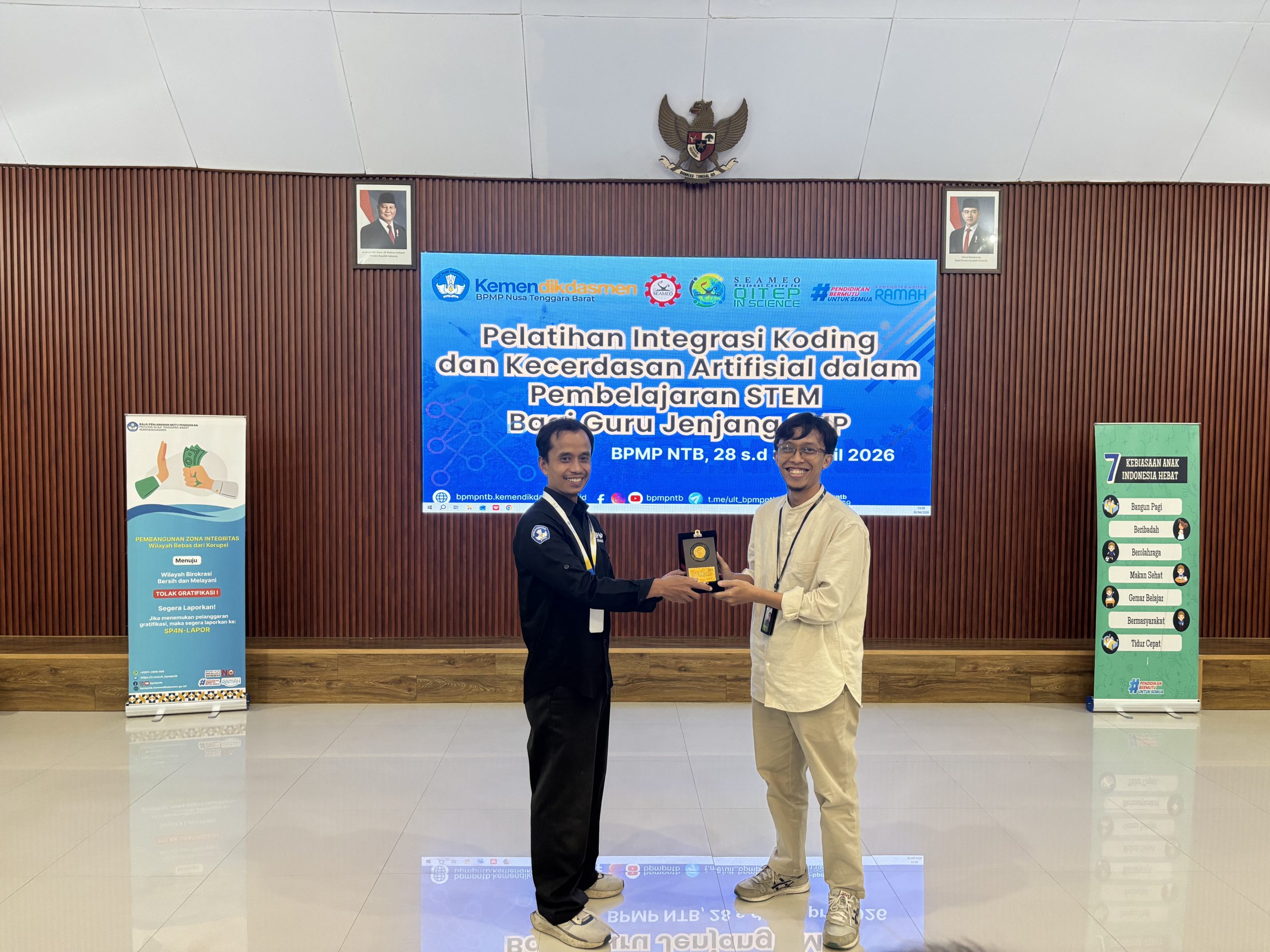
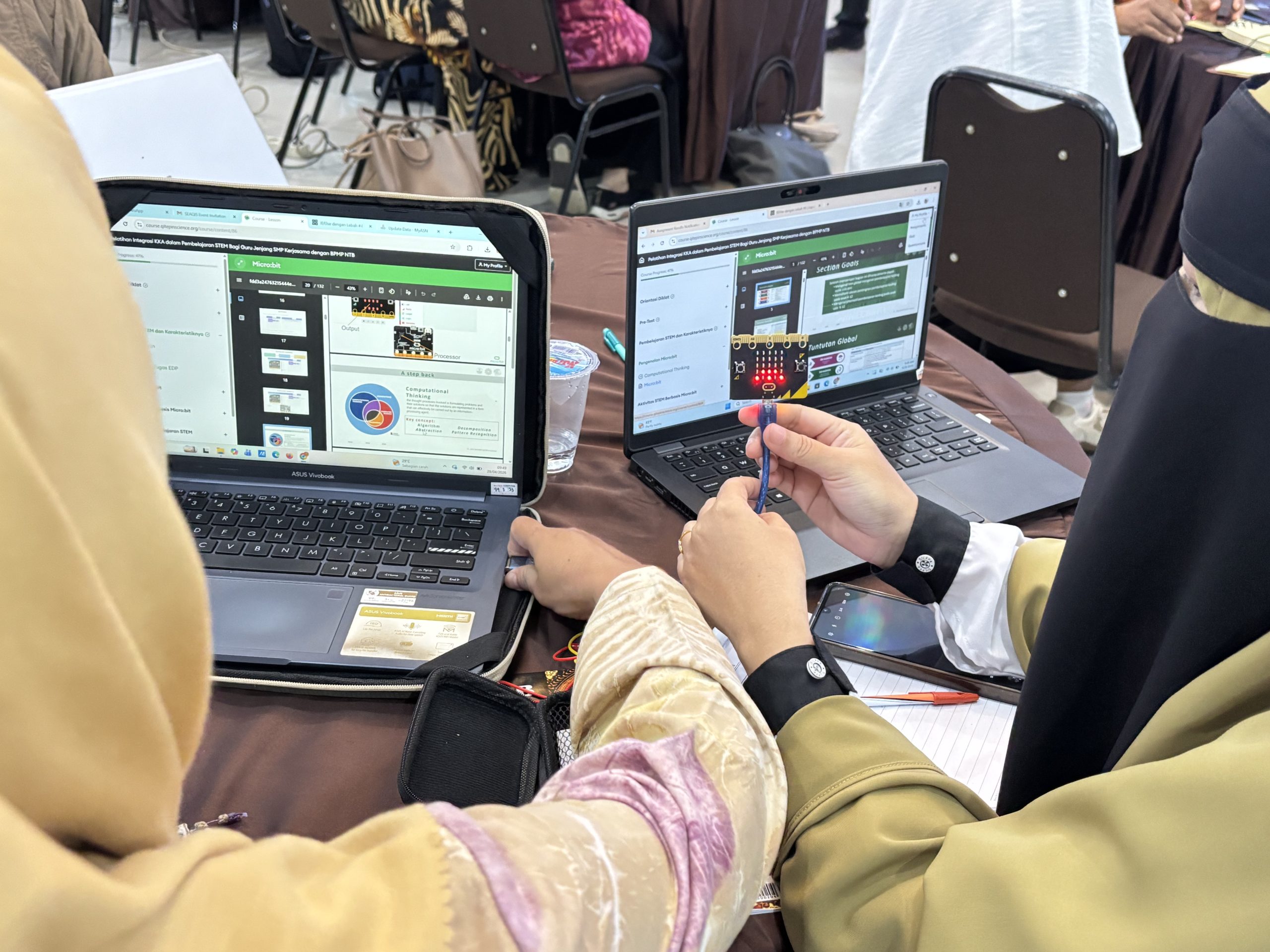
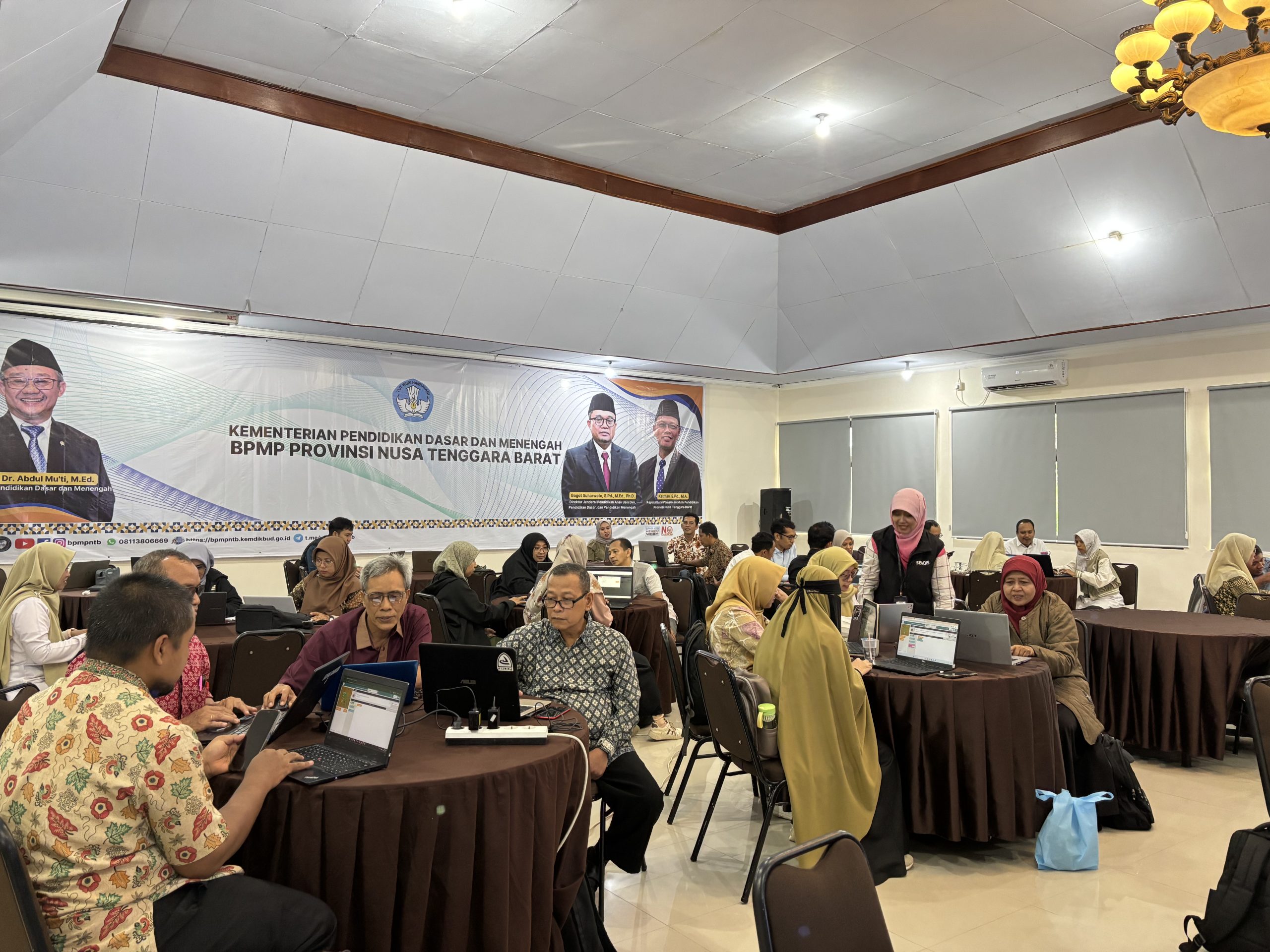
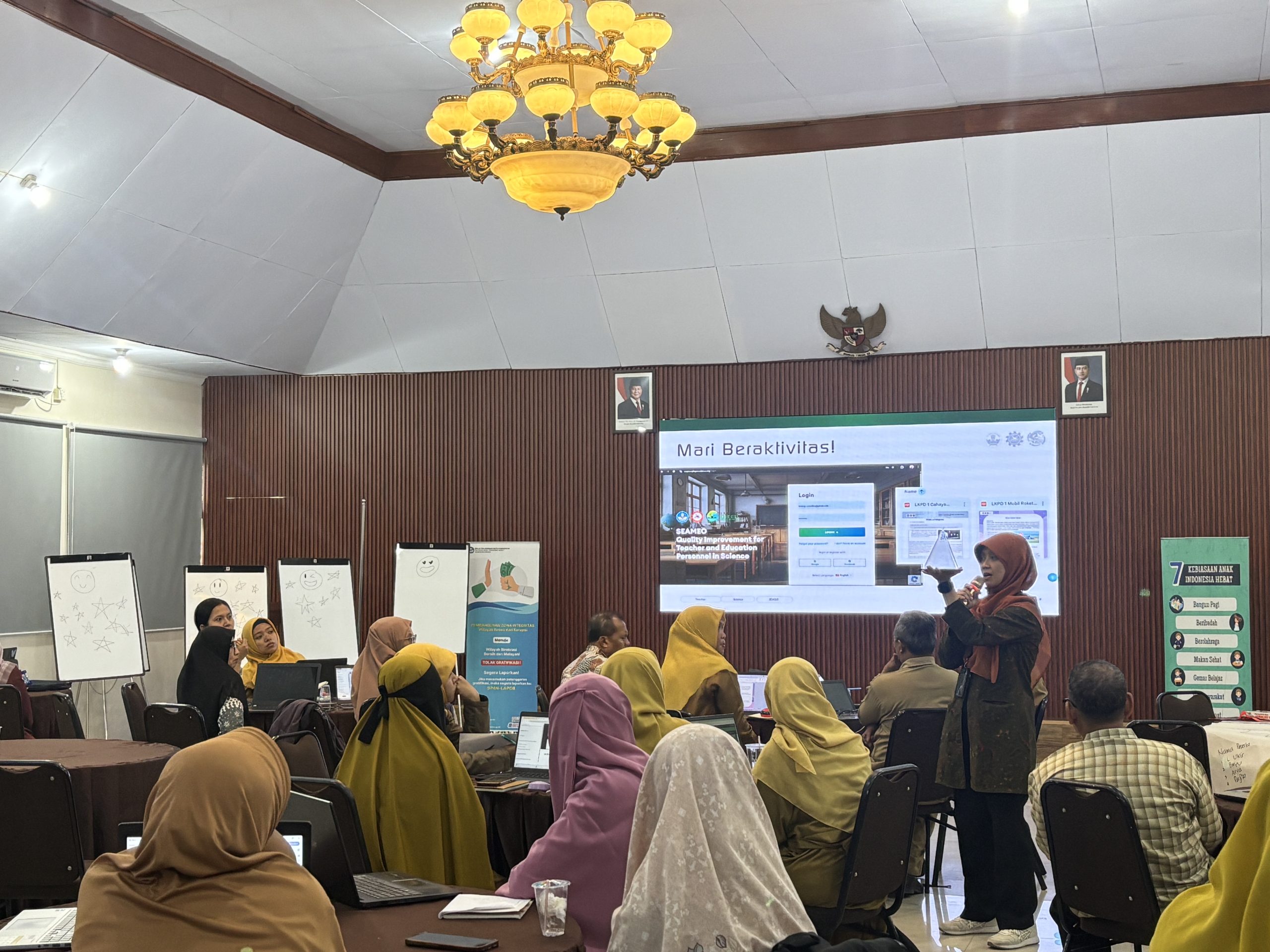
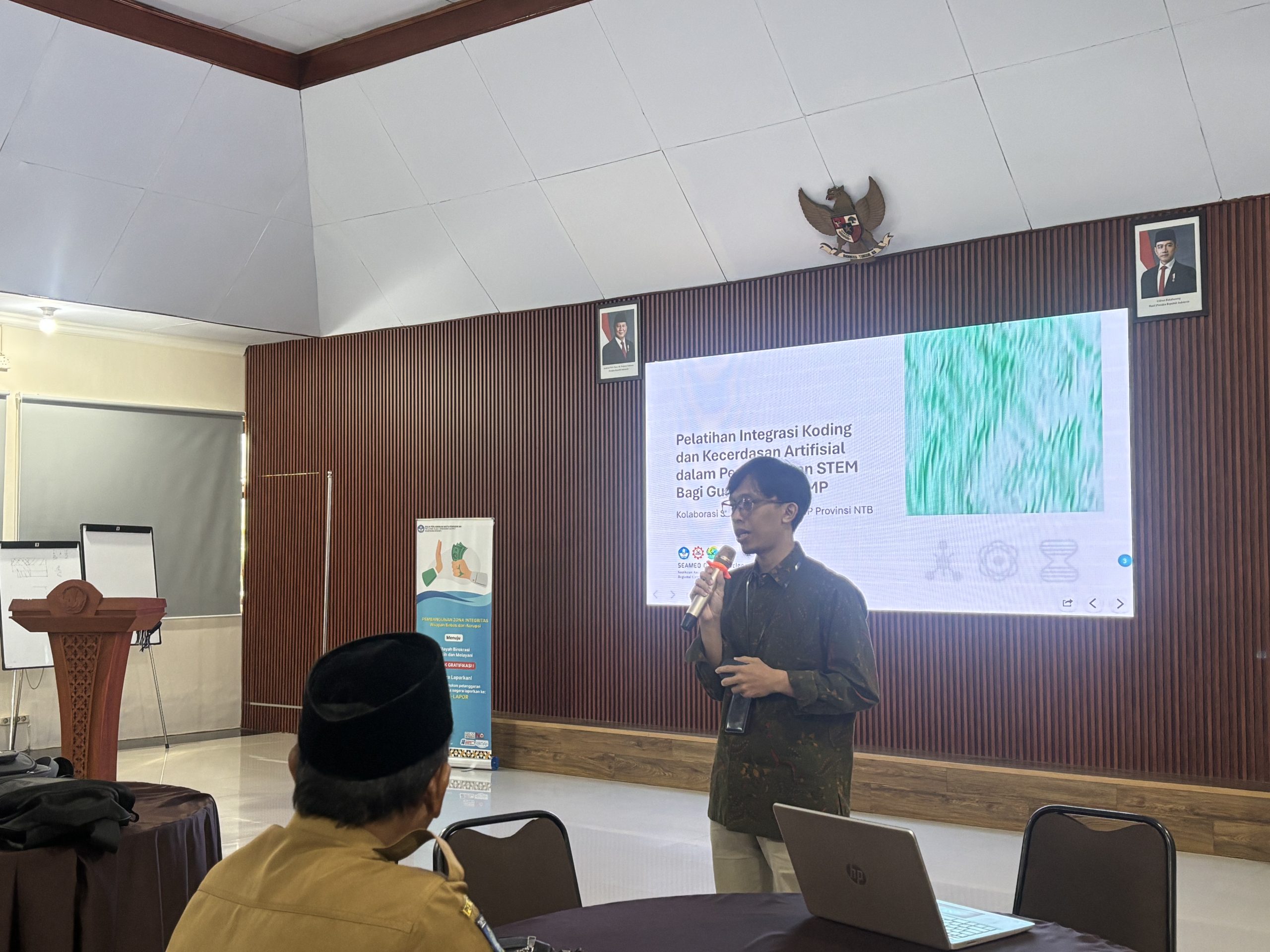
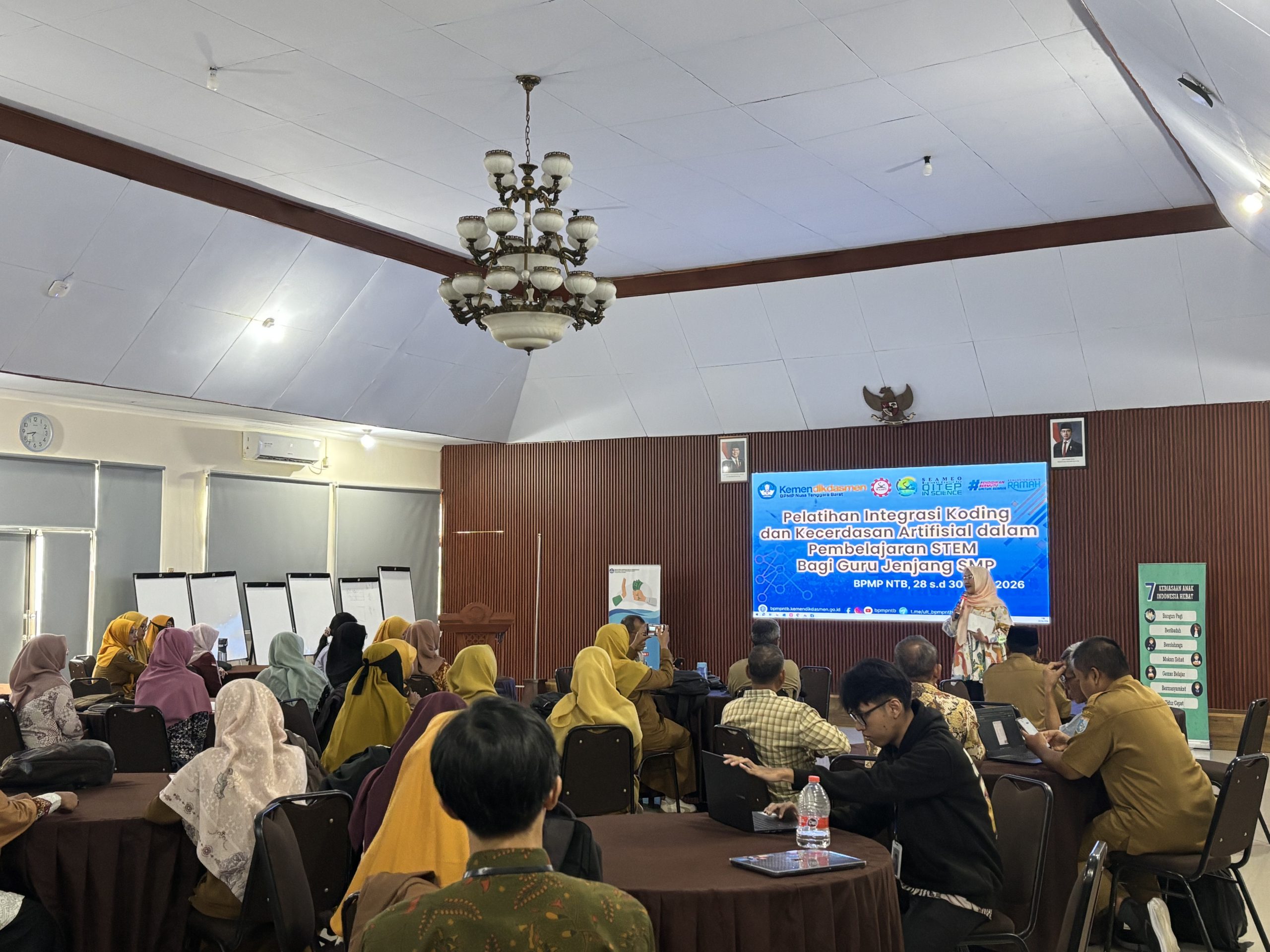
SEAQIS, in collaboration with BPMP West Nusa Tenggara (NTB), conducted a training on the integration of coding and artificial intelligence (AI) in STEM learning for junior high school science teachers from 28 to 30 April 2026 at BPMP NTB. The programme brought together 40 science teachers from Mataram City and West Lombok Regency to enhance their capacity in designing innovative STEM learning experiences that are relevant to technological advancements.
The training focused on strengthening teachers’ understanding of STEM education, coding, and artificial intelligence, as well as exploring ways to integrate these approaches into classroom learning. Participants were introduced to STEM learning principles and engaged in various hands-on activities designed to demonstrate the application of STEM concepts in meaningful and engaging contexts.
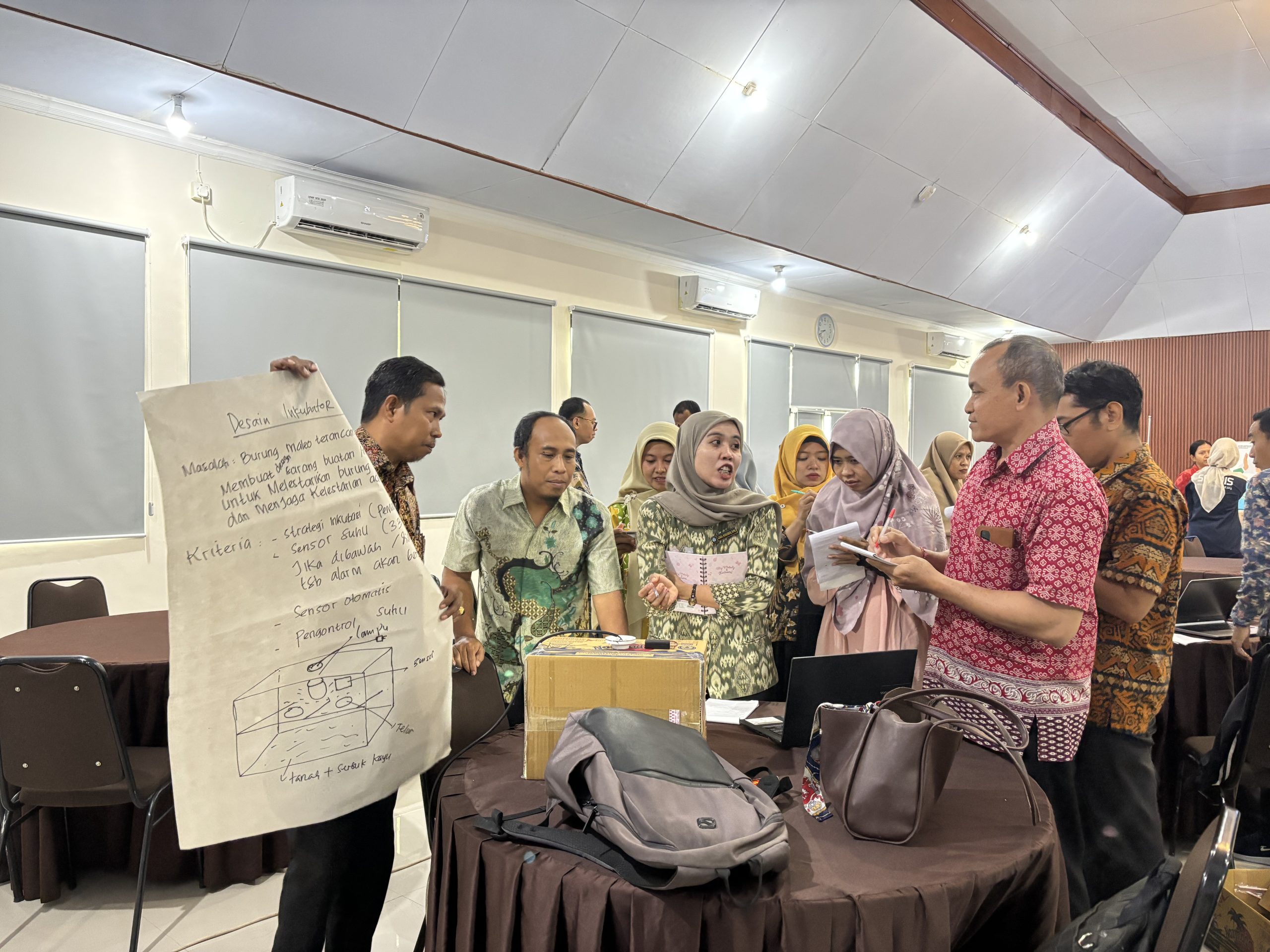
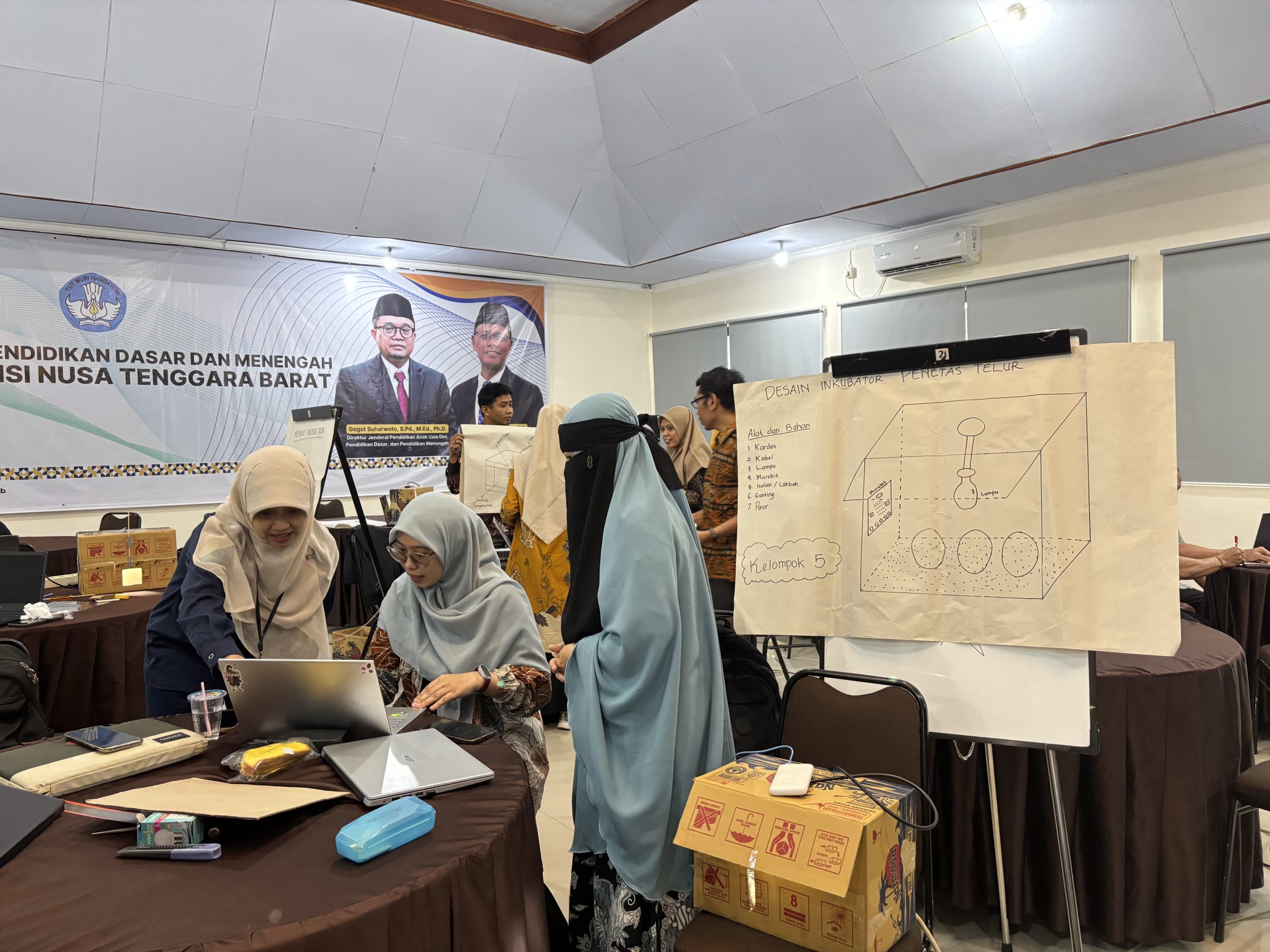
Through project-based learning activities, participants designed and developed several STEM products, including holograms, balloon-powered rocket cars, and a prototype of a Maleo bird egg incubator using micro:bit technology. These activities encouraged participants to apply the Engineering Design Process (EDP), identify STEM components within their projects, and explore how coding and AI can support problem-solving and innovation in education.
The training also provided opportunities for collaboration and reflection through group discussions, project presentations, and peer feedback sessions. By evaluating and exchanging ideas on one another’s work, participants gained insights into improving their designs while strengthening their understanding of STEM-integrated learning practices.
As part of the programme, participants completed pre- and post-assessments, evaluated the training, and developed follow-up action plans to support the implementation of STEM, coding, and AI-based learning in their schools. Through this training, teachers gained practical knowledge and skills that will enable them to create more contextual, interactive, and future-oriented learning experiences for their students while fostering the development of 21st-century competencies.
Writers: Fathika Anjani and Salsabila Nadhifah
