
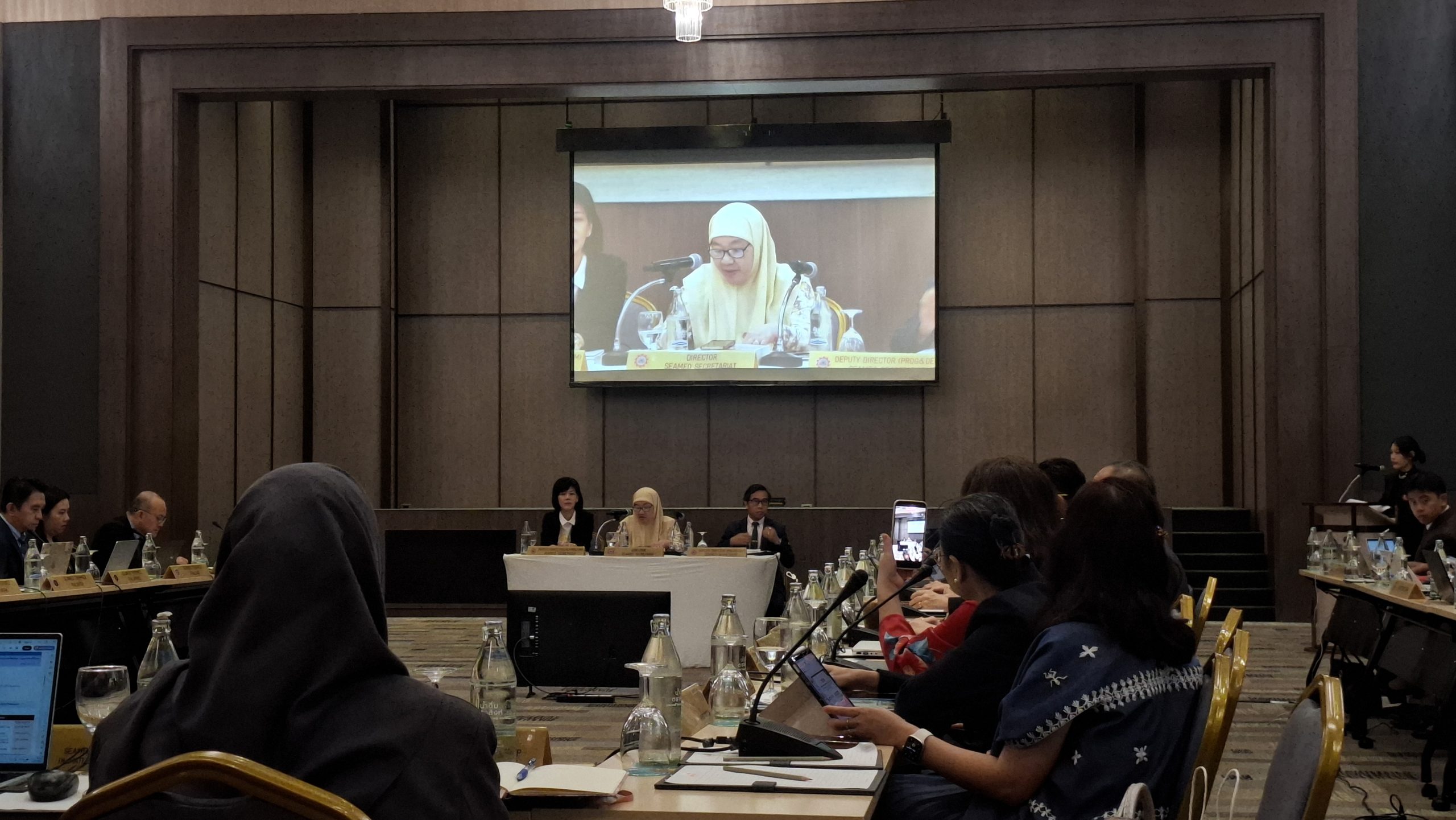
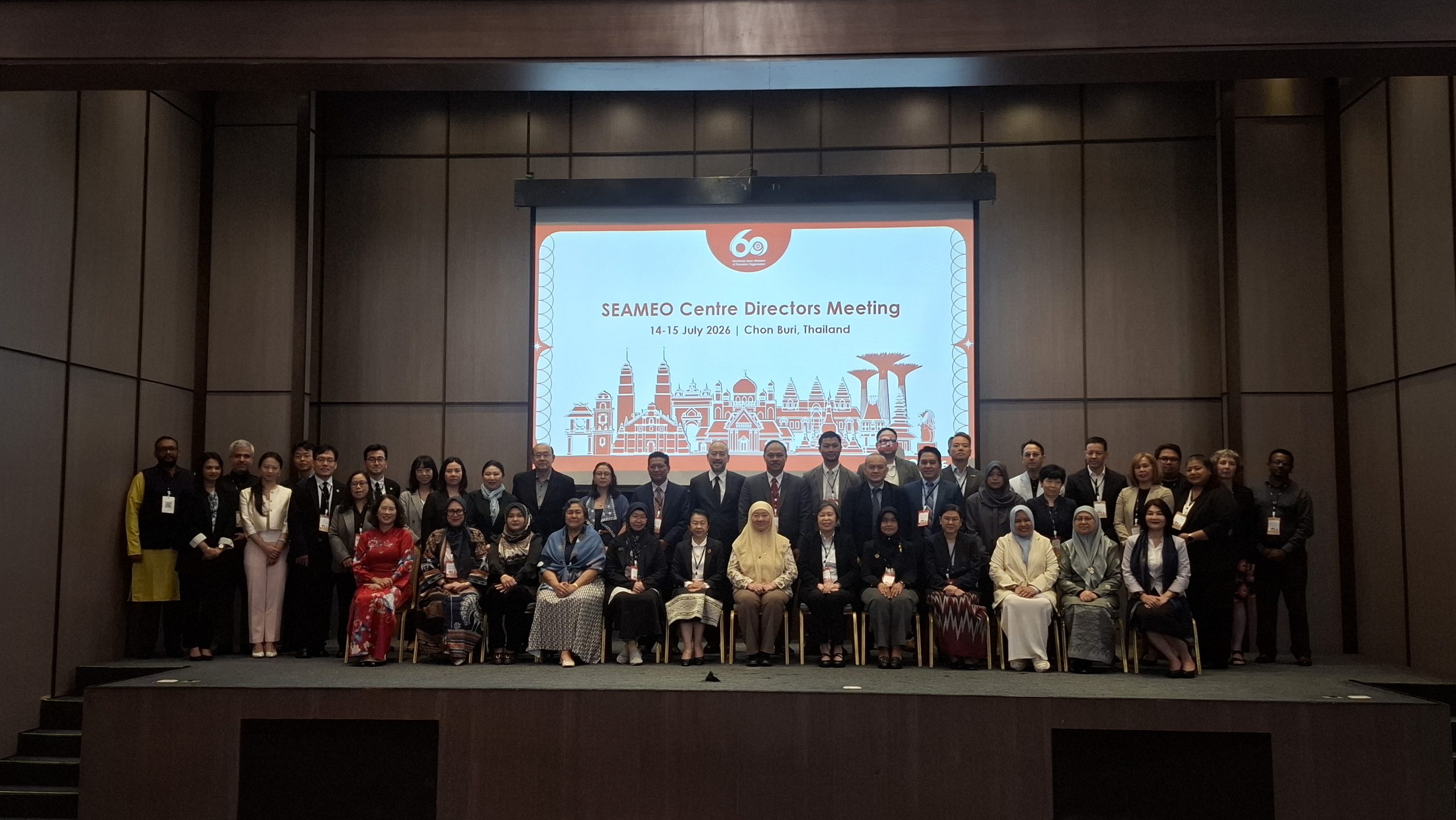
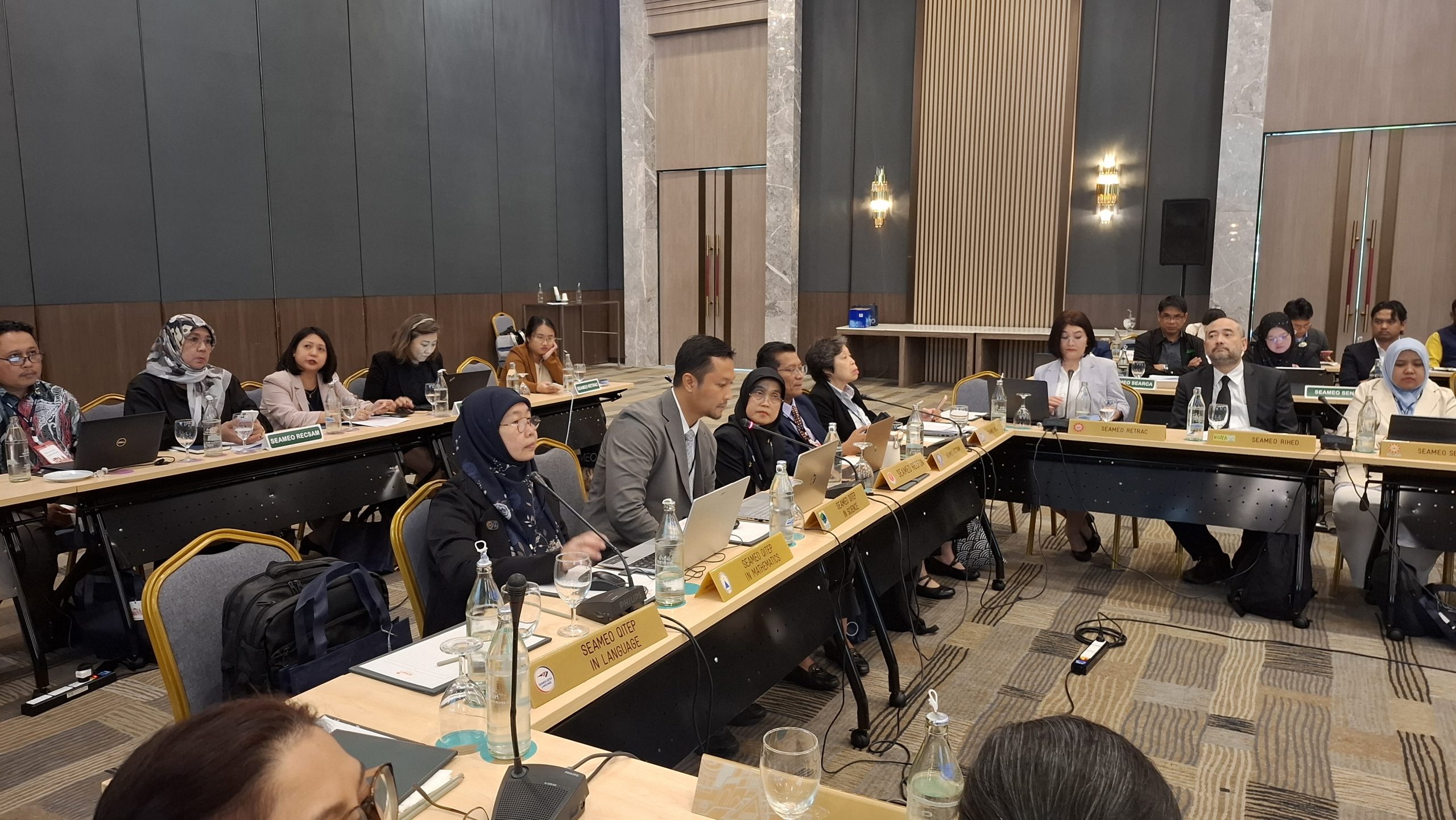
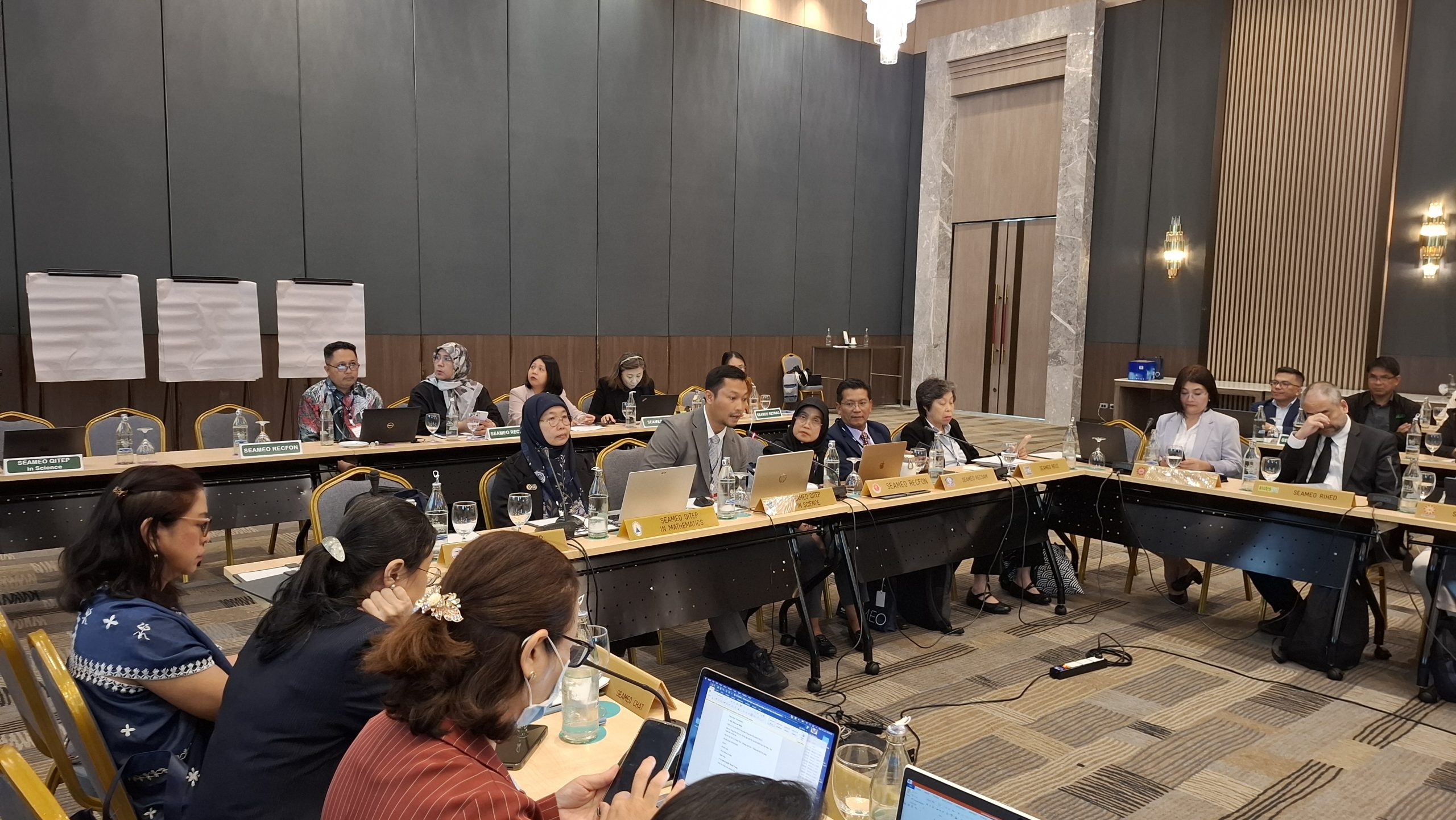
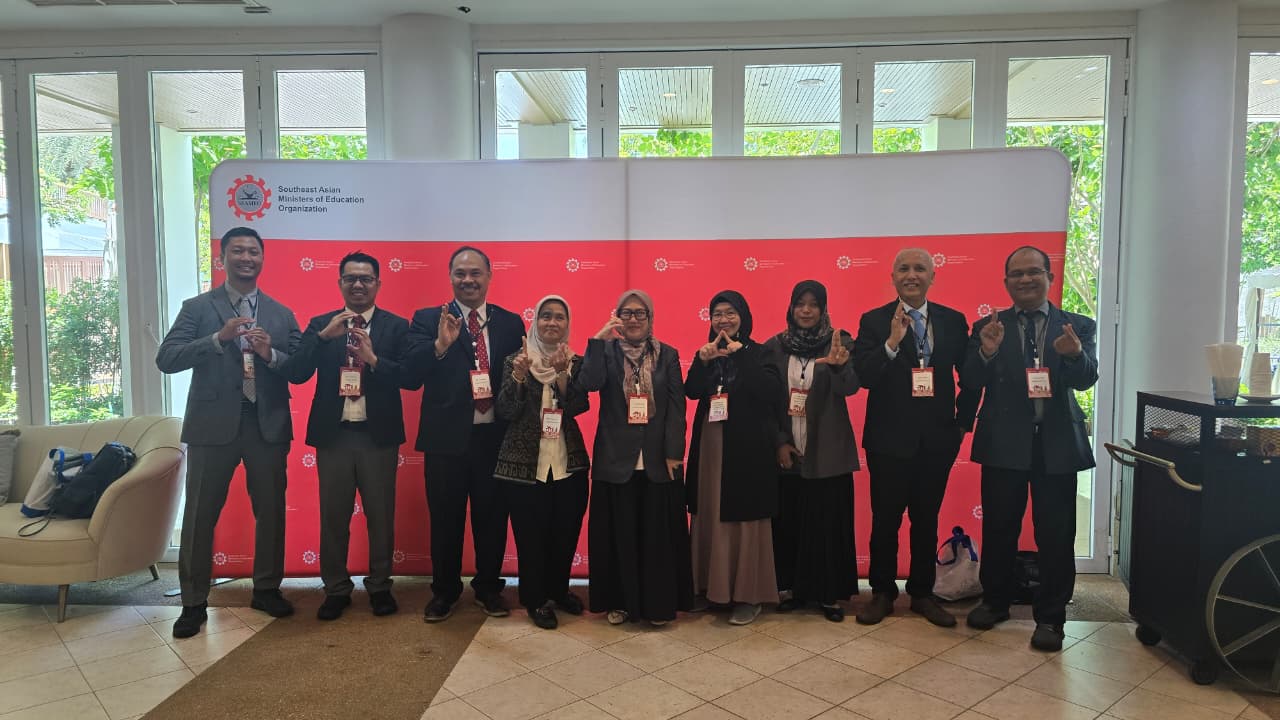
The SEAMEO QITEP in Science (SEAQIS) took part in the SEAMEO Centre Directors Meeting (CDM) 2026, held on 14–15 July at the Amari Bangsaen Hotel in Chonburi, Thailand. SEAQIS was represented by Centre Director Reza Setiawan and Deputy Director for Administration Zuhe Safitra, joining Centre Directors and delegates from across the SEAMEO network, together with representatives of Associate Member Countries, Affiliate Members, and Partners.
A highlight of SEAQIS’s participation was the presentation of its working paper, “VeeBO: An AI-Powered Classroom Observation Platform for Science Teacher Professional Development,” during the Working Papers – Matters for Discussion session on the second day of the meeting.
VeeBO (Video-Based Observation) is an AI-powered platform developed by SEAQIS that analyses teacher-recorded classroom videos against a purpose-built science observation rubric, producing structured, evidence-based feedback reports without the need for a trained observer to be physically present in the classroom. The rubric, developed by SEAQIS facilitators and researchers, is tailored to science, inquiry-based and STEM teaching contexts, and is applied through a modular, three-layer structure that adapts to different lesson types.
Key features showcased included automated observation scoring, mobile-first report delivery, goal tracking across observation rounds, integration with SEAQIS’s Learning Management System, and a firm commitment to data privacy, including teacher-controlled video storage and automatic face blurring during analysis.
In presenting the working paper, SEAQIS invited fellow SEAMEO Centres to explore potential areas of collaboration in applying VeeBO within their own teacher professional development programmes, while the meeting took note of the platform’s introduction.
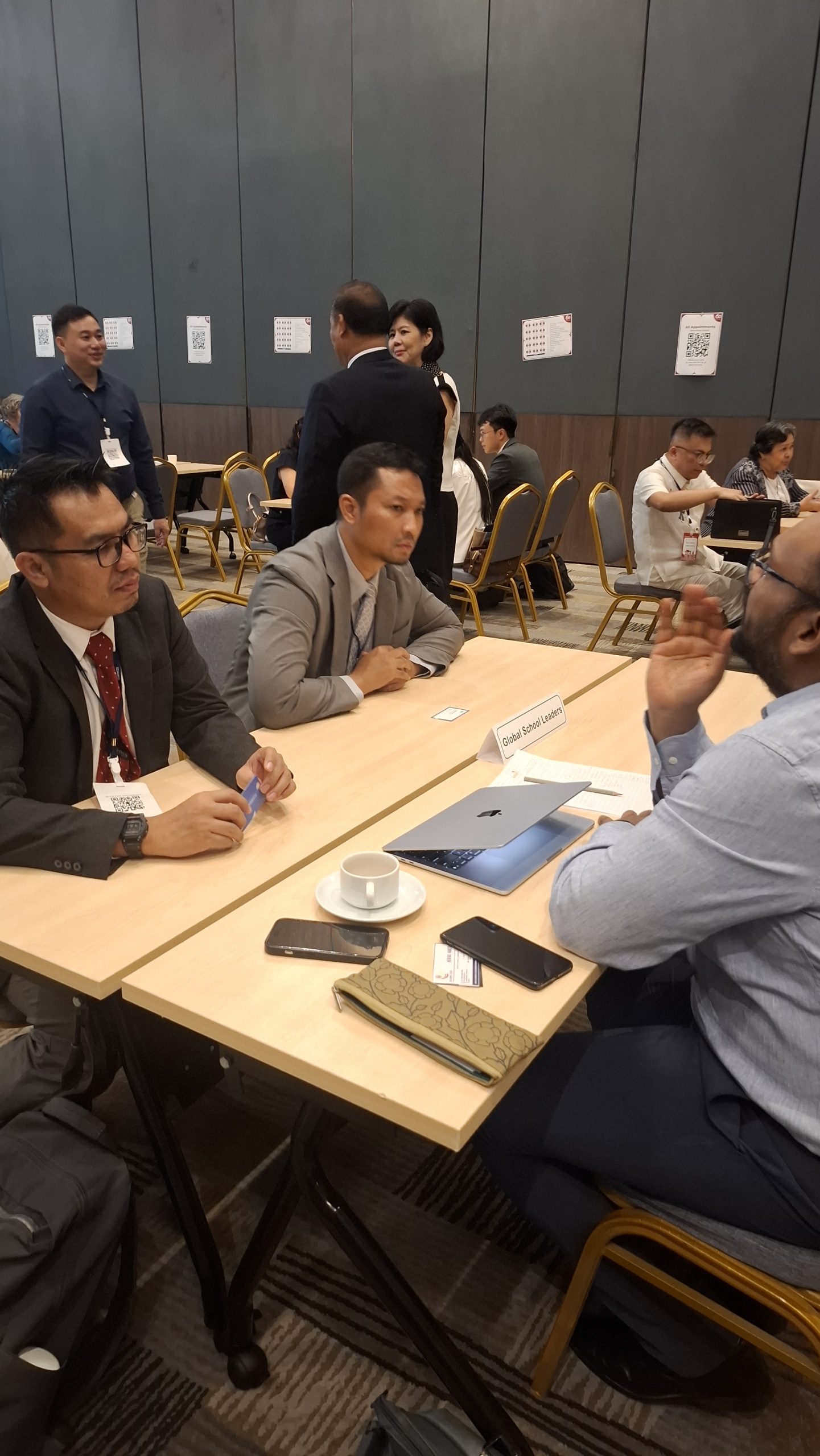
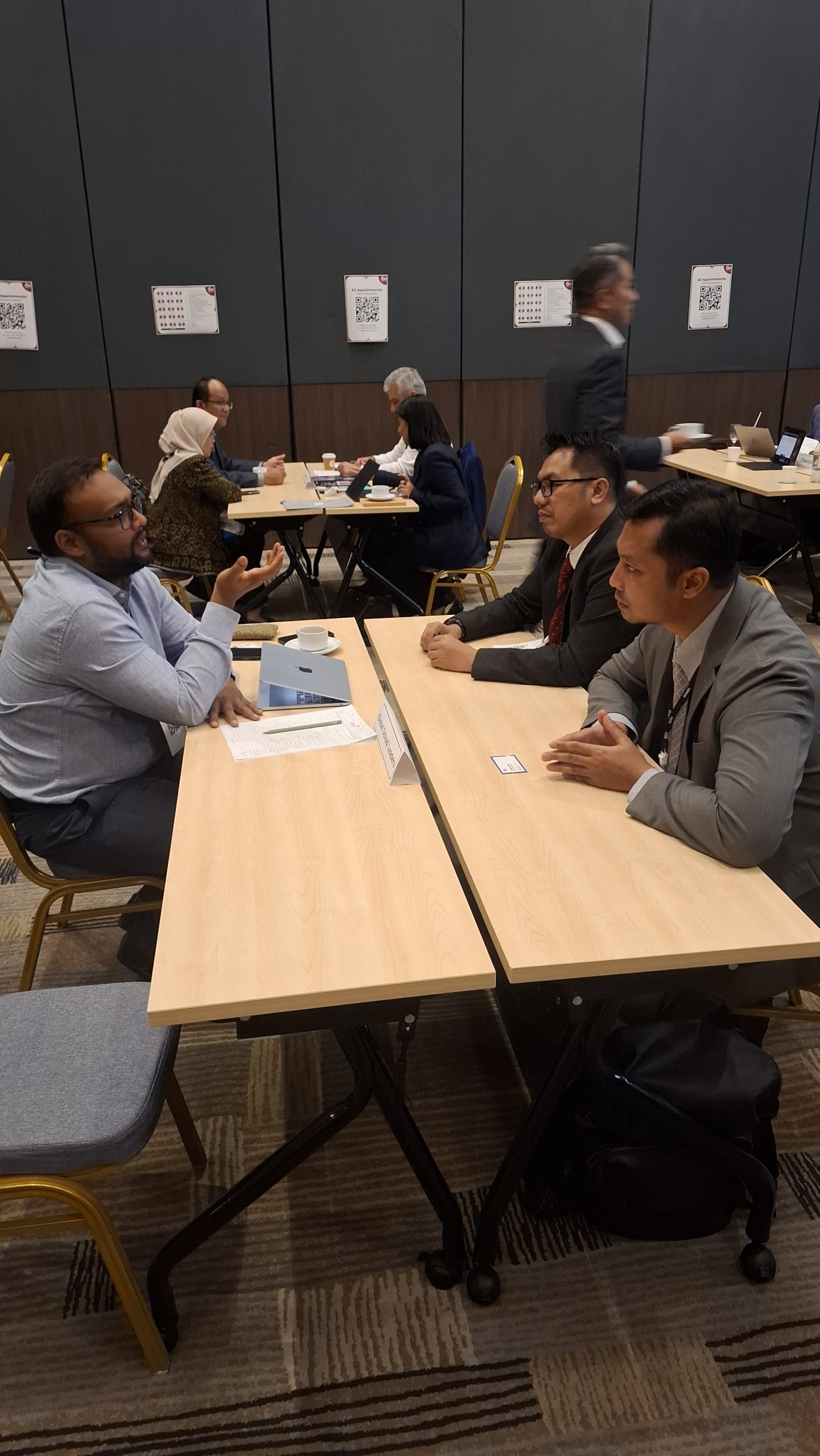
Beyond the formal sessions, SEAQIS made good use of the first day’s Networking Session to hold bilateral discussions with several partner organisations. Conversations with the British Council touched on scholarship opportunities under the STEM for Women and Climate Change Education programmes, while discussions with Kahoot! explored the potential use of its premium features. SEAQIS also spoke with Global School Leaders about a possible speaking engagement at an upcoming Training Course on Science Classroom Education.
These engagements reflect SEAQIS’s ongoing commitment to strengthening regional cooperation in science education and to building new partnerships that support the professional growth of science teachers across Southeast Asia.
Written by Zuhe Safitra
