







Education for Sustainable Development (ESD) empowers people to change the way they think and work towards a sustainable future. ESD allows individuals to explore environmental issues, increases public awareness, engage in problem solving, and take action to improve the environment. As the result, it provides the public with the necessary skills to make informed decisions and take responsible action. In line with the international interest in the need for education for sustainable development (ESD) at all levels. Since 2009, SEAQIS has been developing a training course in the promotion of environmental education. This programme helps to empower science teachers and education personnel to integrate environmental education issues in schools and in community. More importantly, one of the goals of this training course is to improve the quality of science teaching and learning in school with respect to environment, ecosystem conservation, and their support to sustainable development.
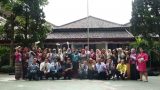
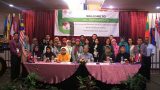
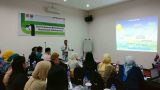
To continue this advocacy effort, this year, SEAQIS held the training Course on Environmental Education for Sustainable Development at Marbella Suites Hotel, Bandung, Indonesia lasting for 10 days from 1 to 10 August 2017. It was attended by 30 teachers and education personnel from the SEAMEO Member Countries. There were six participants each came from Cambodia, Lao PDR, Malaysia, Myanmar, Thailand, Vietnam, two from Timor Leste, and 22 from Indonesia.
To enlighten them, SEAQIS also invited nine experts, namely, Prof Oekan S Abdoellah and Dr Parikesit from Institute of Ecology (Padjajaran University), Prof Rizaldi Boer from the Centre for Climate Risk and Opportunity Management in Southeast Asia Pasific (CCROM – SEAP), Prof Shahbaz Khan from the UNESCO Regional Science Bureau for Asia and the Pacific, Prof Ismunandar from The Indonesian Education and Cultural Section of Embassy of Indonesia in Washington DC, Dr Yusuf Hilmi Adisendjaja and Dr Ana Ratna Wulan from Indonesia University of Education, Dr Dwi Nastiti Iswarawanti from University of Indonesia, and Susi Herawati SE MSc from the Ministry of Environment and Forestry of Indonesia.
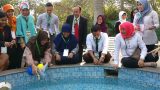
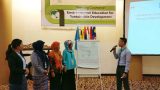
As the session continued, the speakers encouraged the participants to impart their knowledge to the students by giving activities on Learning and skill Assessment on Environmental Science and Sustainable Development Perspective through introduction of STEM (Science, Technology, Engineering and Mathematic) Education, Assessment method in EESD, designing learning scenario, and peer teaching session related to Environmental Education for Sustainable Development topic. In addition, the participants were enriched by the material the World Wildlife Fund (WWF) team conveyed related to the wilderness preservation and the reduction of humanity’s footprint on the environment especially about the biodiversity of REEPS (Rare, Endangered, Endemic, & Protected Species) in Southeast Asia region. At the same time, Panda Mobile of WWf was opened to selected elementary students at PPPTK IPA Bandung and SD Widuri (Baleendah, Bandung Regency) from 8-9 August 2017 as part of the advocacy to children.
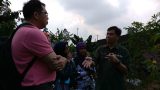
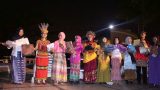
The Participants also had the out of the classroom activities like visiting the Saung Angklung Mang Udjo, Climate Village Pulosari at Pangalengan Subdistrict, as well as SMK Negeri 1 Bandung which has won the best implement the sustainable environmental systems on 2016 SEAMEO-Japan Education for Sustainable Development (ESD) Award under the theme ‘Saving Energy’. At the end of the training, they shared their talents in a cultural exchange programme with zest.
Written by Heri Setiadi

selamat malam, assalamualaikum .. mau tanya sehubungan dengan di adakannya kegiatan training course on science technology engineering mathematics (STEM) education for Asia Pasific di Jawa Barat. saya ingin mengikuti kegiatan tersebut. cara mendaftarnya gimana? mohon arahan dan informasinya terima kasih.
selamat pagi, maaf baru reply…pendaftaran melalui online, apakah ibu sudah mendaftar?