
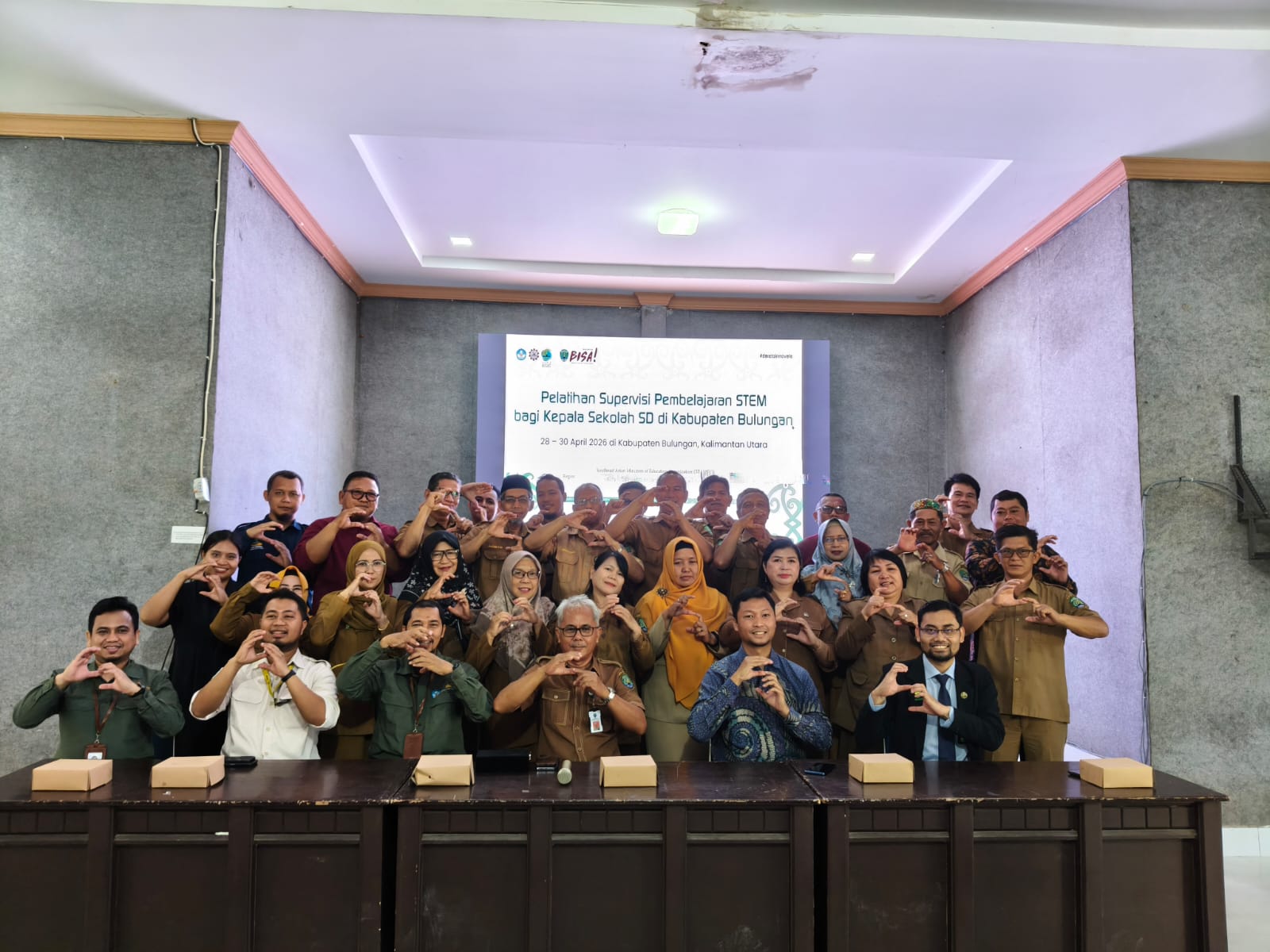
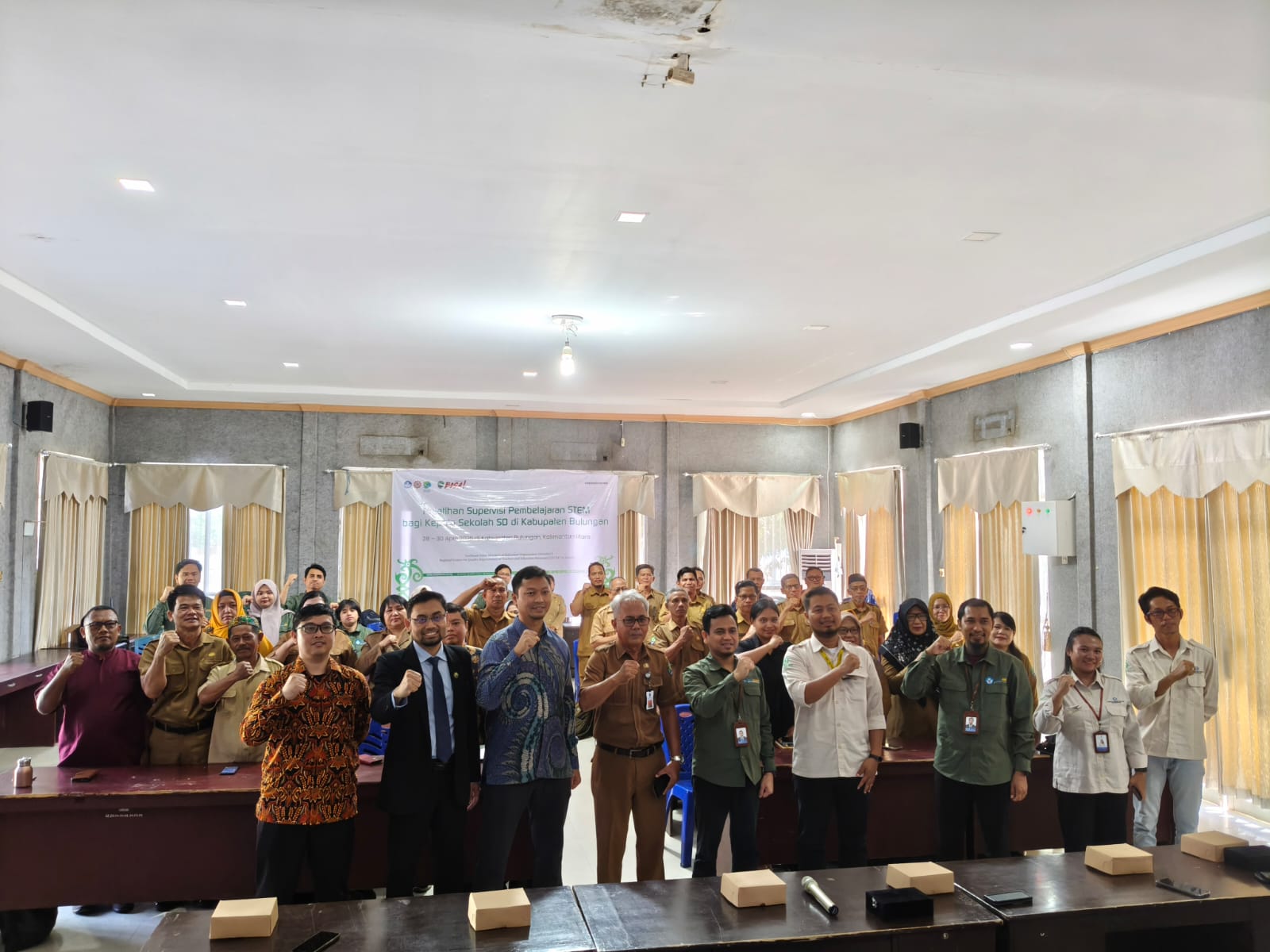
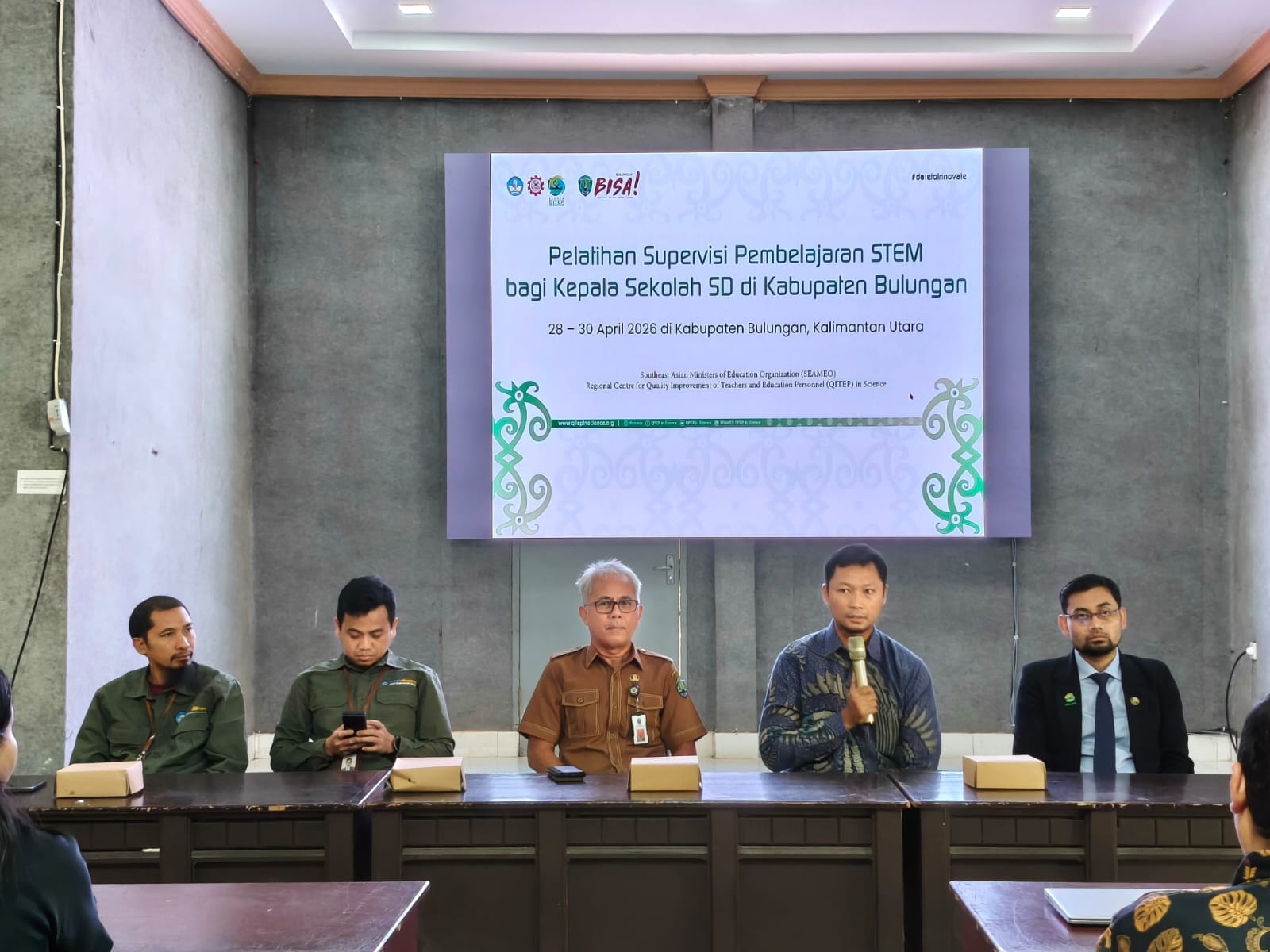
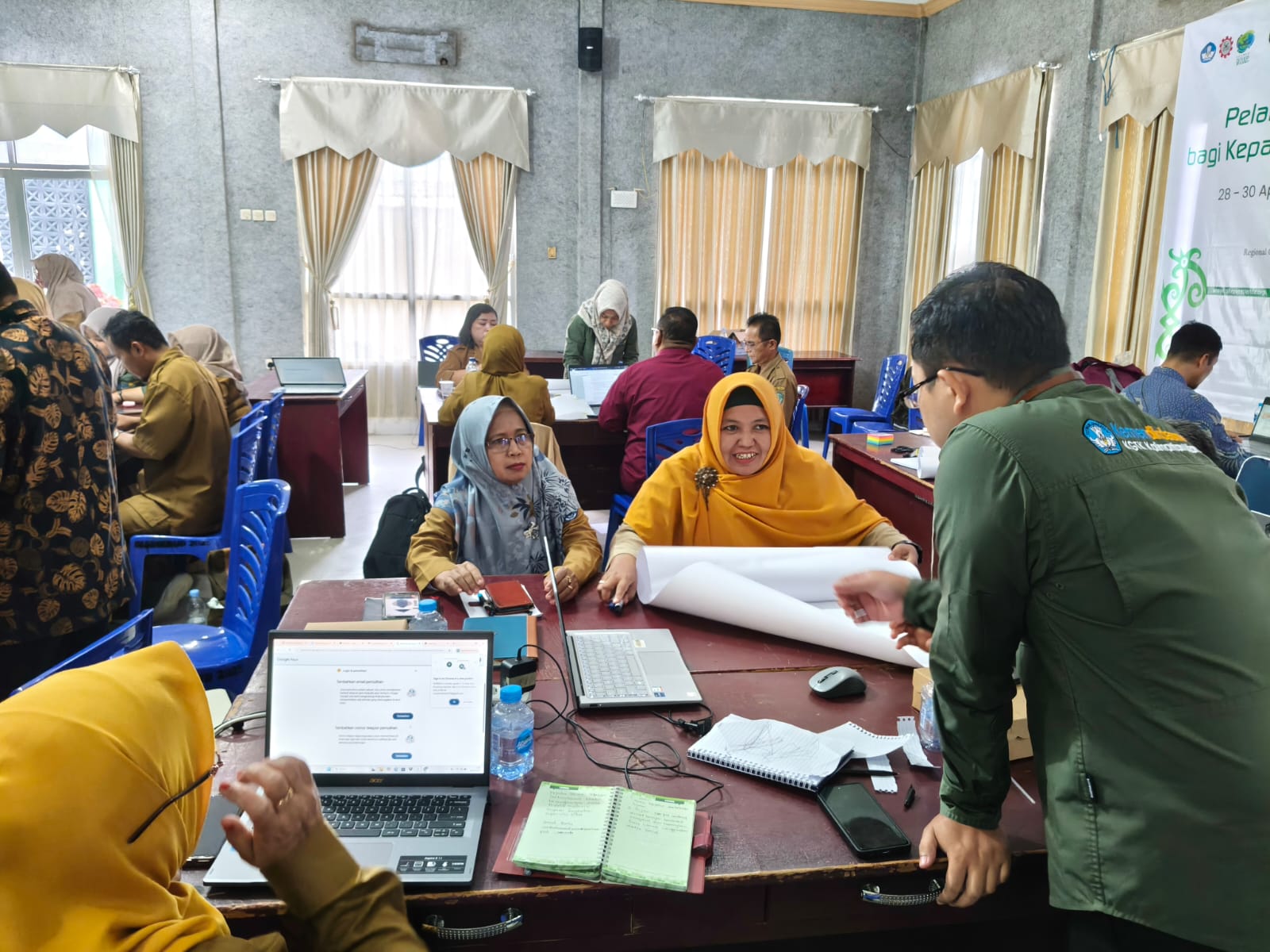
As STEM education continues to play a bigger role in preparing students for the future, school principals are expected not only to manage schools but also to lead meaningful learning transformation. To support this effort, SEAQIS, in collaboration with KGTK North Kalimantan and PT. PKN, conducted a training on STEM learning supervision for elementary school principals in Bulungan Regency from 28 to 30 April 2026. The programme focused on enhancing principals’ competencies in academic supervision to better support the implementation of STEM learning in elementary schools.
During the opening session, SEAQIS Director Mr Reza Setiawan highlighted SEAQIS’ commitment to strengthening science education through teacher and school leadership development programmes. Mr Ihsan Faisal, representing KGTK North Kalimantan, explained that KGTK has shifted its focus to improving teacher quality through training, supervision, monitoring, and continuous evaluation, while also establishing strategic partnerships, including with PT PKN. He further emphasised the importance of strengthening 21st-century skills such as critical thinking, creativity, and collaboration in response to ongoing challenges in educational quality. The programme was officially opened by Drs Suparmin, Head of the Bulungan Regency Education and Culture Office, who encouraged participants to strengthen their instructional leadership and STEM-based academic supervision through the Engineering Design Process (EDP) approach, as well as foster Professional Learning Communities (PLCs) within their schools.
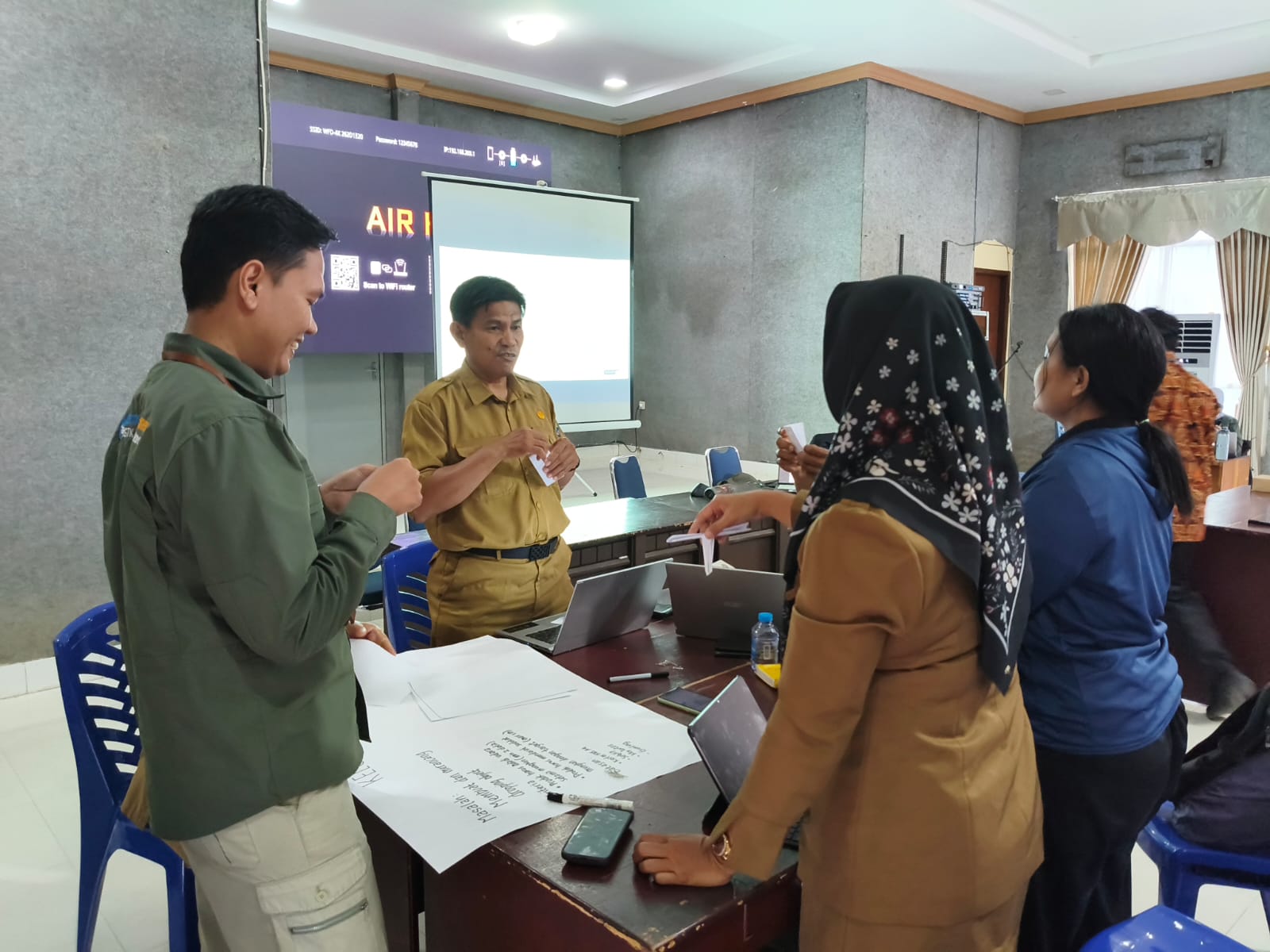
Throughout the three-day programme, participants explored STEM literacy, education policy, global trends in science education, and STEM learning implementation in elementary schools. The sessions combined theoretical discussions with practical activities, including classroom observation analysis, supervision simulations, and constructive feedback practices. Participants also developed follow-up action plans that were later presented and discussed collaboratively.
The training atmosphere remained highly interactive, with participants actively engaging in discussions, group work, and hands-on activities. Supported by facilitators, the collaborative learning environment encouraged participants to confidently exchange ideas and reflect on strategies for improving STEM learning practices in their schools.
Through this activity, participants gained a stronger understanding of STEM-based academic supervision and became better prepared to lead more innovative and structured implementation of STEM learning in their respective schools.
Writers: Hamriana and Salsabila Nadhifah
