
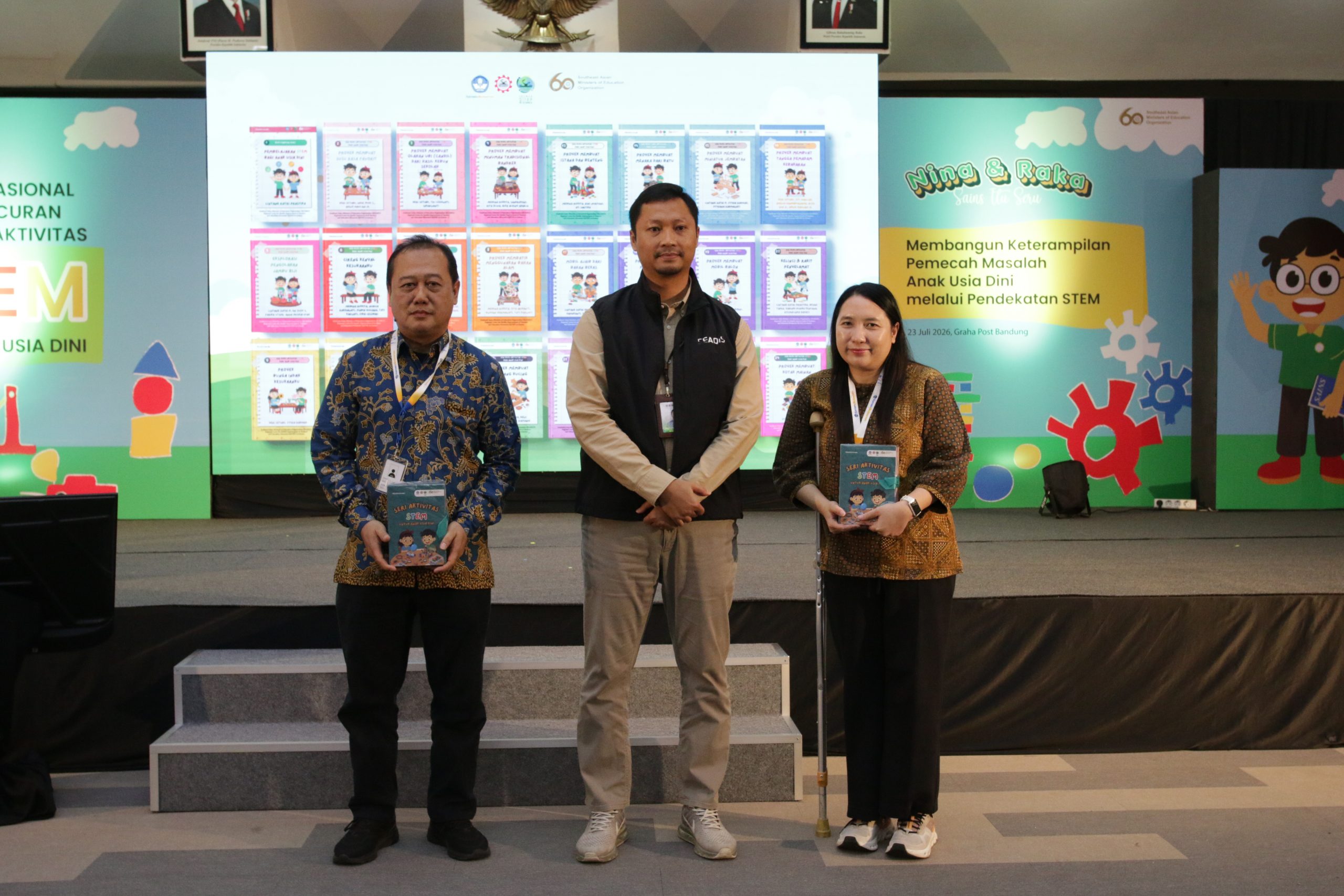
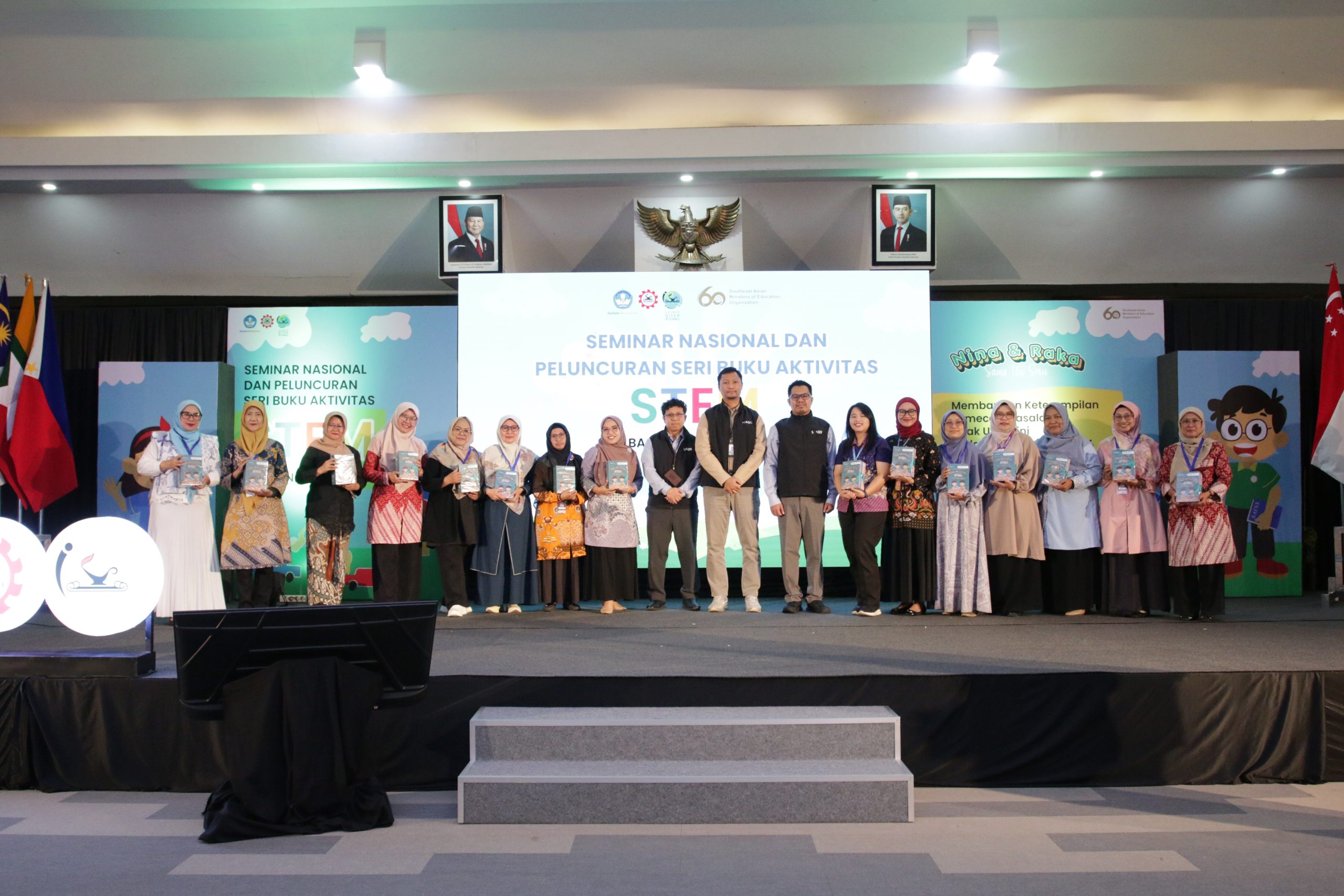
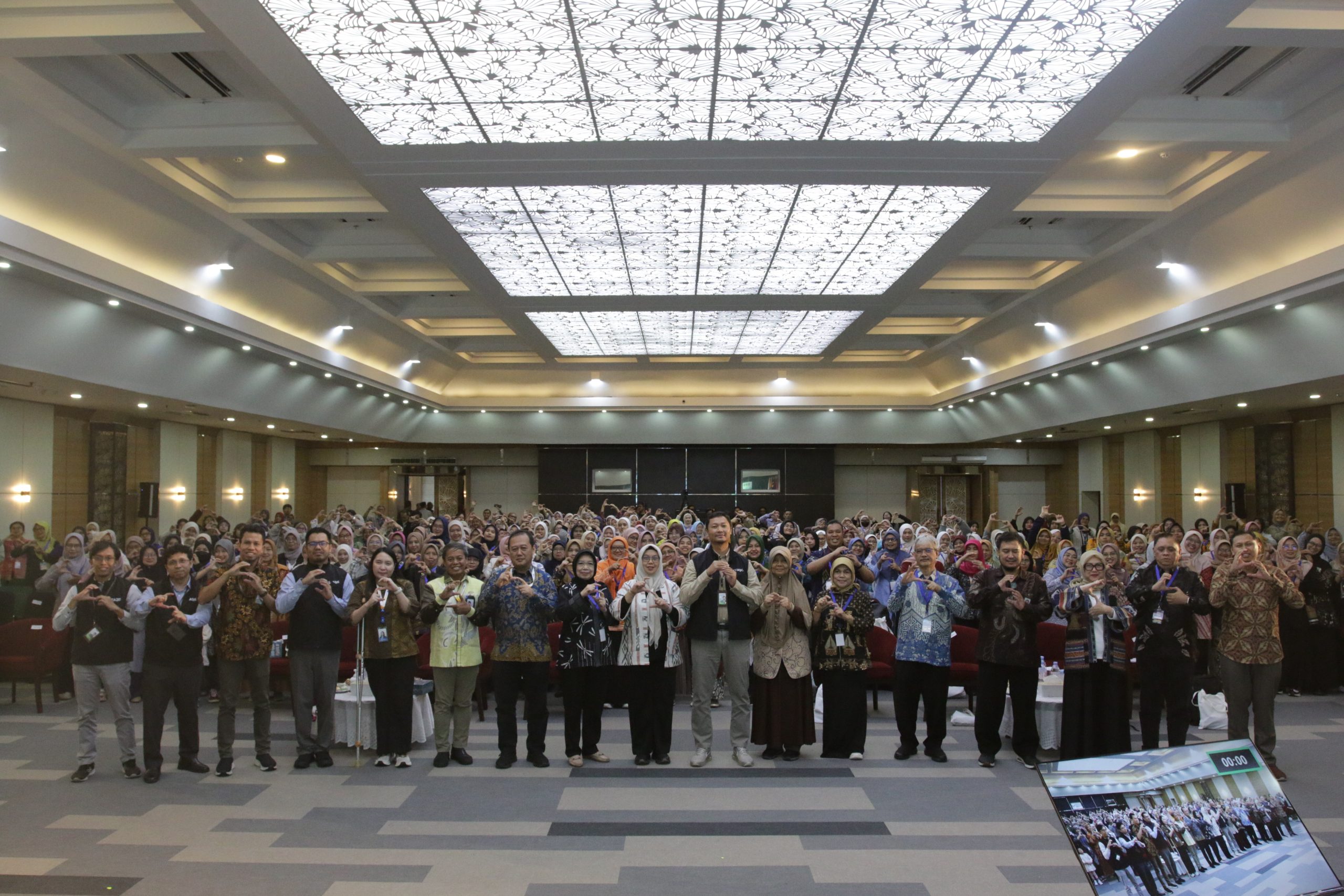
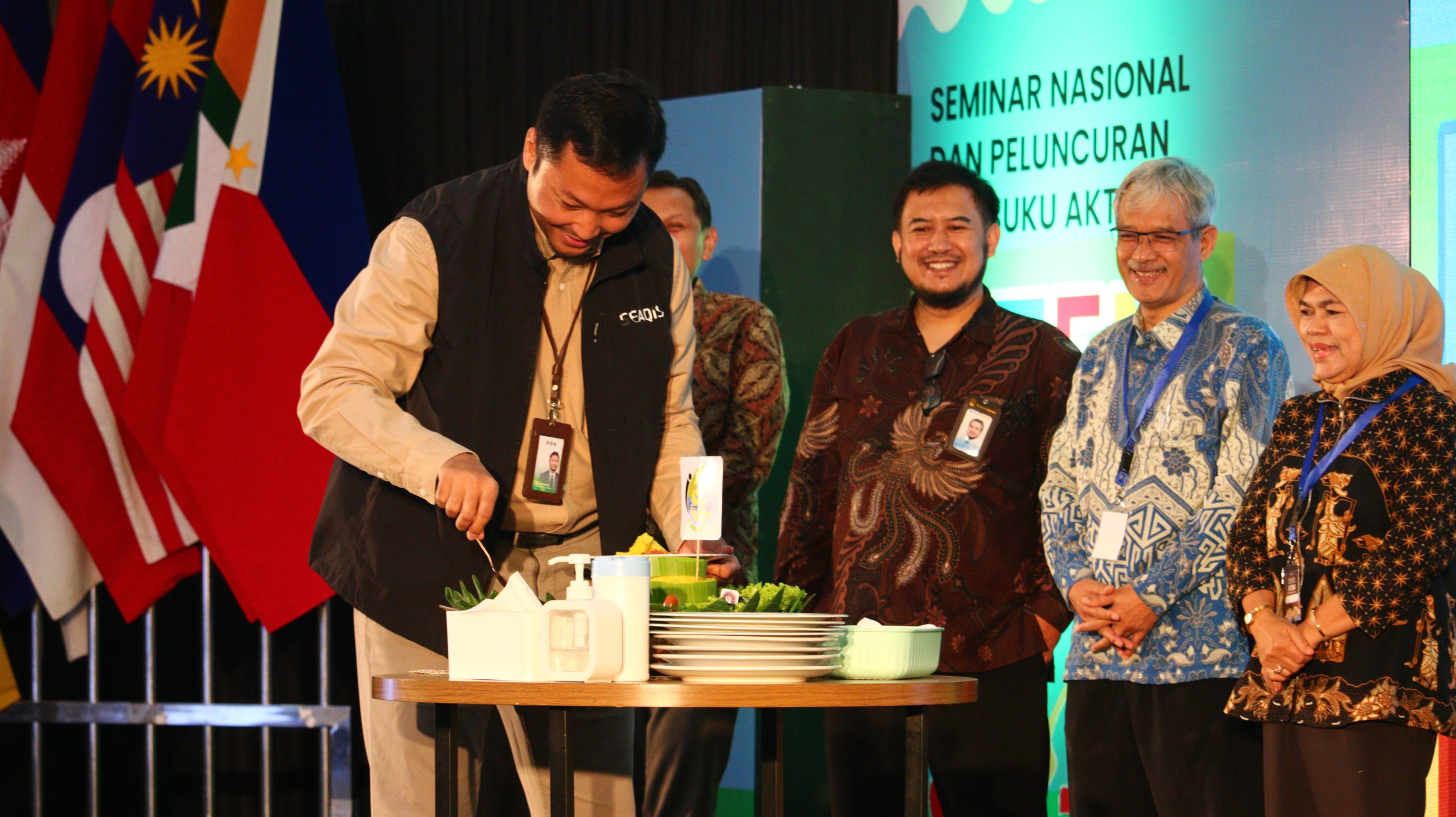
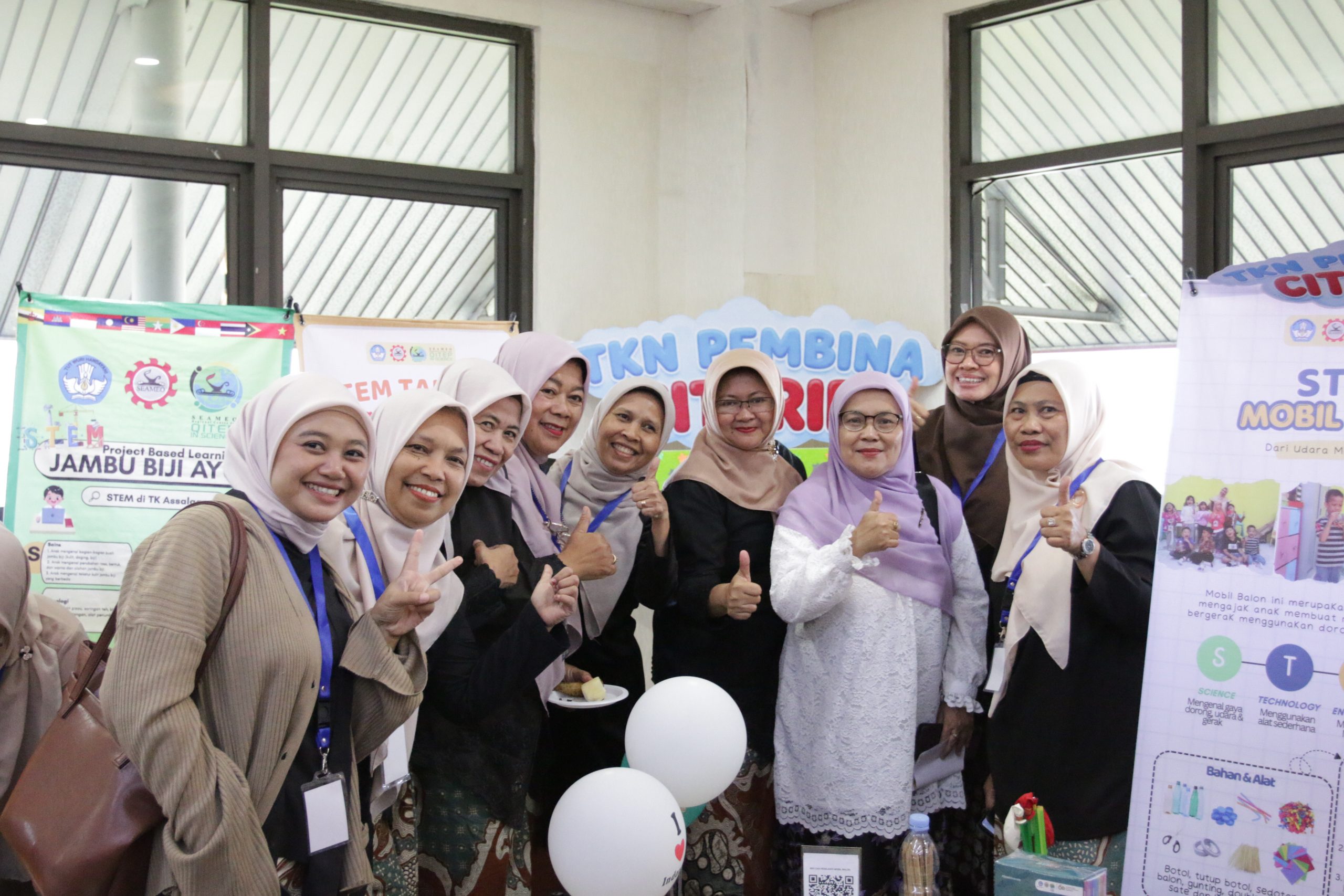
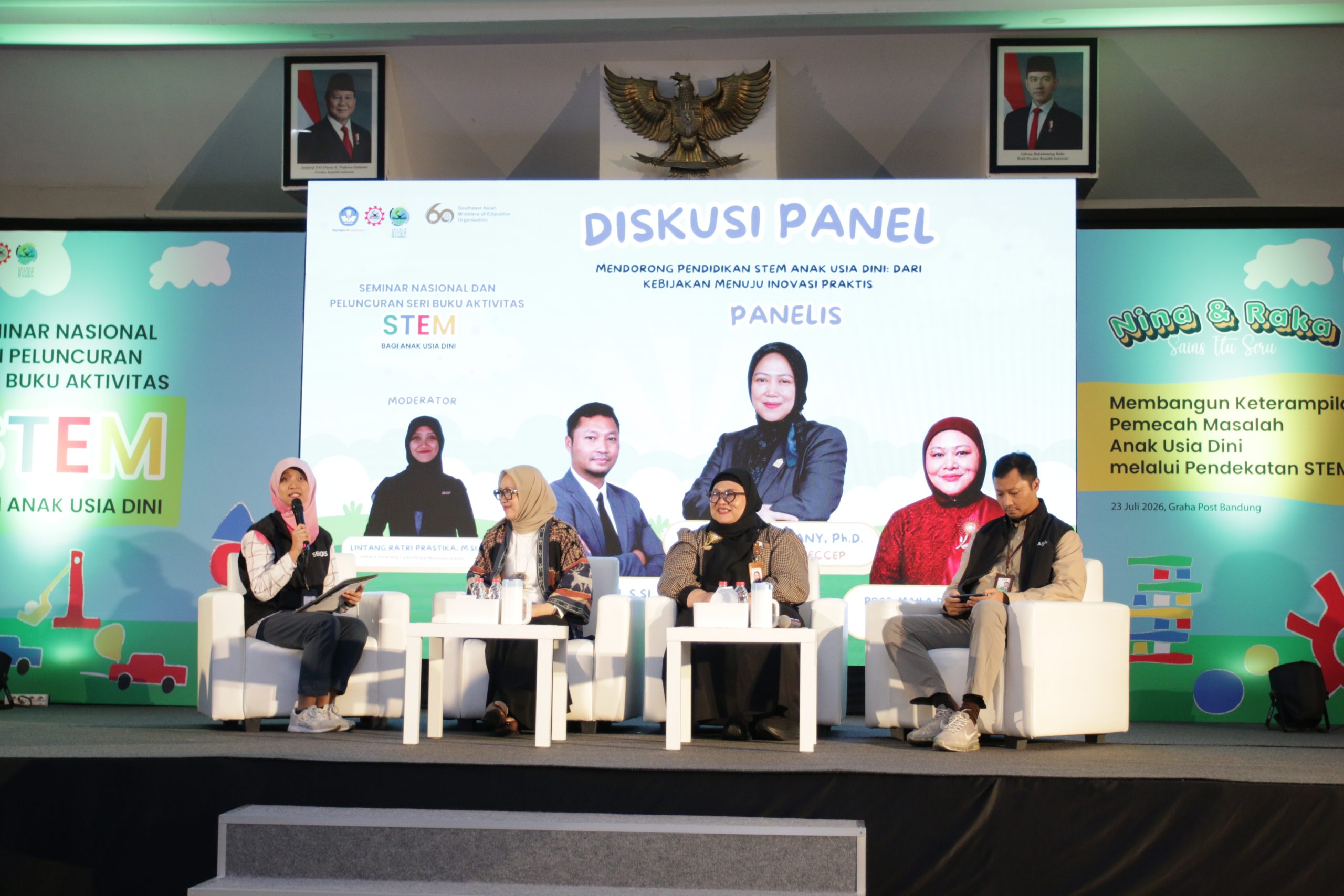
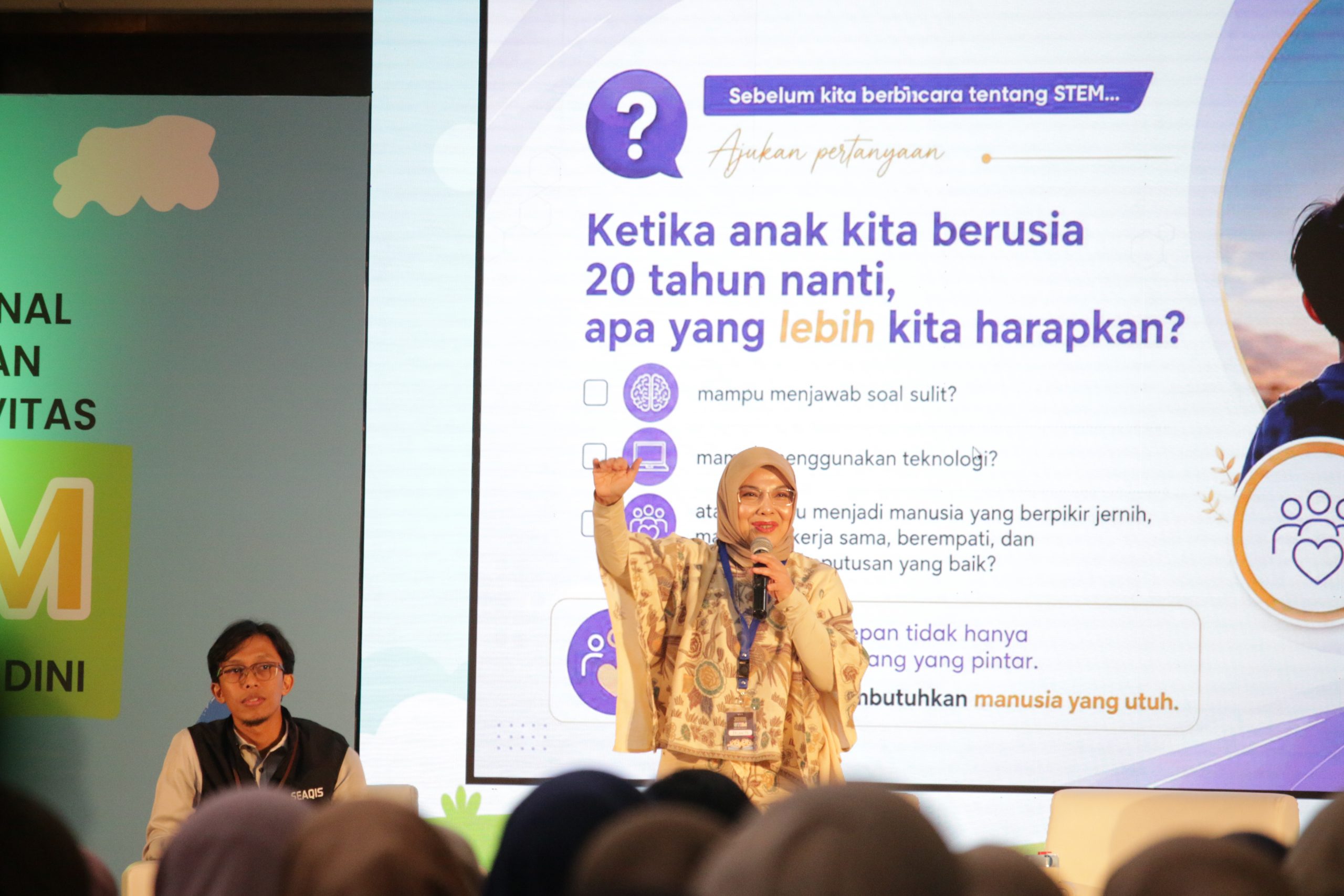
SEAMEO QITEP in Science (SEAQIS) organised a National Seminar and officially launched the 24-STEM Learning for Early Childhood Education Activity Book Series at Graha Pos Indonesia, Bandung, on 23 July 2026. The event commemorated SEAQIS’s 17th anniversary and Indonesia’s National Children’s Day 2026, bringing together around 200 participants from across the early childhood education sector, as well as children. The celebration was also joined by SEAQIL and SEAQIM, as the three SEAMEO QITEP Centres share the same founding date of 13 July 2009.
Developed collaboratively with 15 SEAQIS partner early childhood education schools, the book series brings STEM learning into practical and accessible classroom resources for early childhood teachers. The seminar also featured a policy panel discussion, a keynote presentation, best practice sharing by partner schools.
The seminar was officially opened by Ir Komarudin, M.Pd., M.Si., Head of the Learning Team at the Directorate of Early Childhood Education and Non-Formal Education Teachers, Ministry of Primary and Secondary Education, who expressed his appreciation for SEAQIS’s commitment to strengthening STEM learning in early childhood education.
During the policy panel discussion, Prof Vina Adriany of SEAMEO CECCEP highlighted that STEM begins with children’s natural curiosity and can be explored using simple, everyday materials. Prof Maila Dinia Husni Rahiem, Special Adviser to the Minister for Primary and Secondary Education, further emphasised that STEM is already embedded in children’s daily activities and encouraged teachers to embrace the concept of “STEM 5M” as an approach that is simple, affordable, and accessible.
In the keynote session, Dr Anne Suryani of Monash University emphasised the importance of team teaching in designing meaningful learning experiences, while Dr Irianti Usman of Tanoto Foundation highlighted the significance of the early years, noting that around 90 per cent of brain development occurs before the age of five.
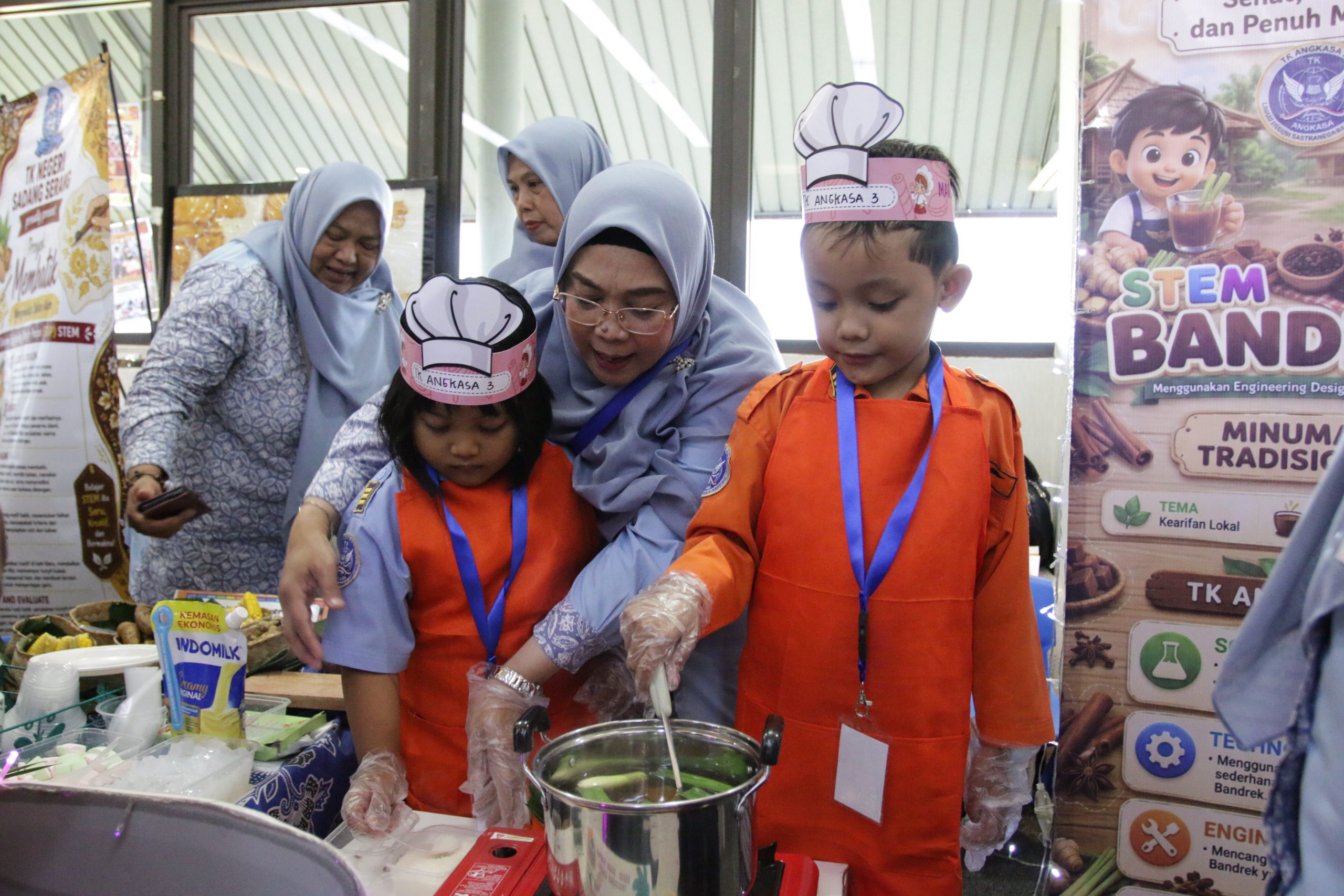
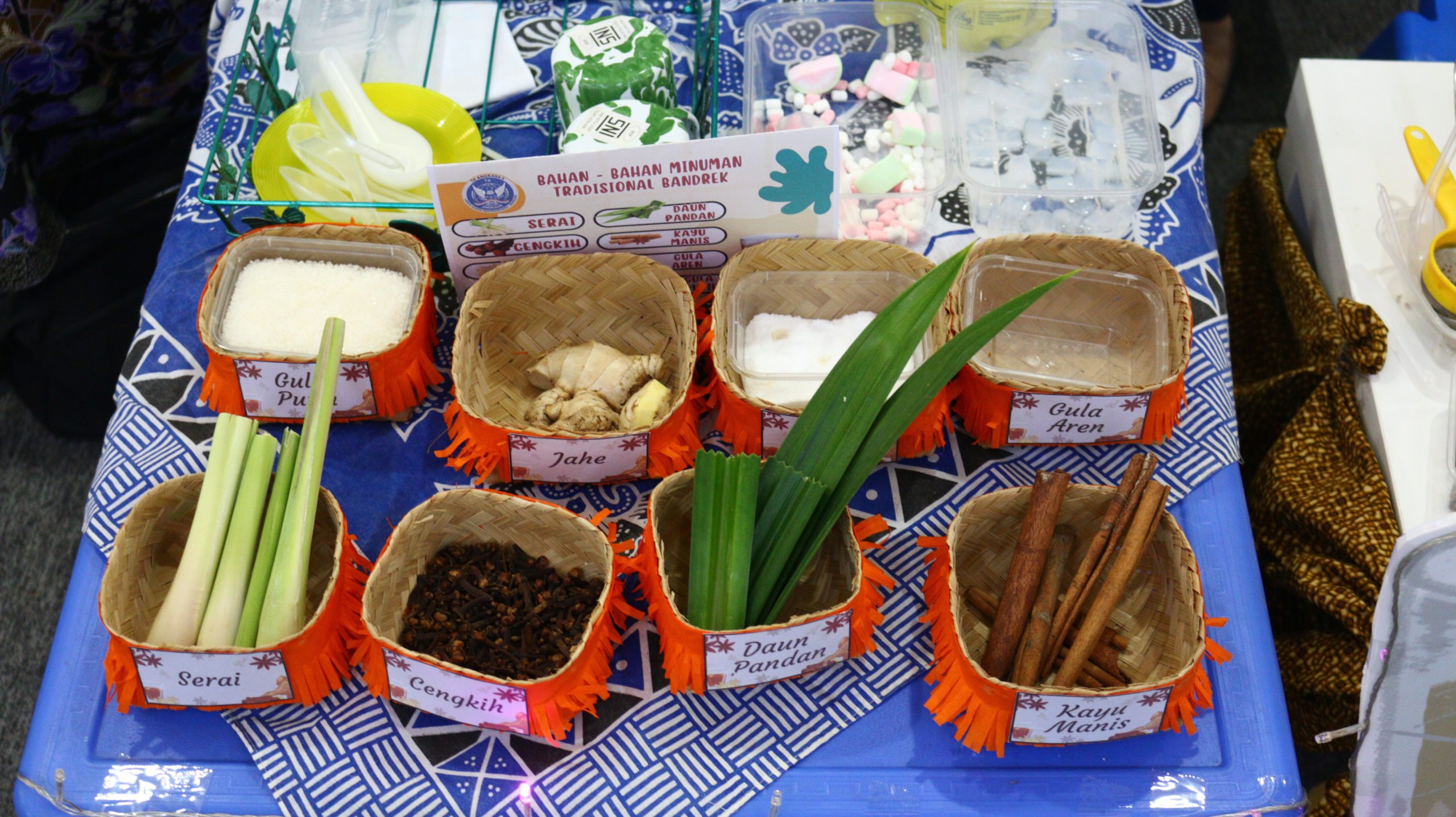
Partner schools also shared STEM learning projects featured in the STEM Activity Book Series for Early Childhood Education, demonstrating how everyday materials can support science exploration, engineering design, local wisdom, environmental awareness, and creative problem-solving. Developed using the Engineering Design Process (EDP), these projects encourage children to identify problems, test ideas, and improve solutions while developing critical thinking, resilience, and collaboration, with teachers acting as facilitators throughout the learning process.
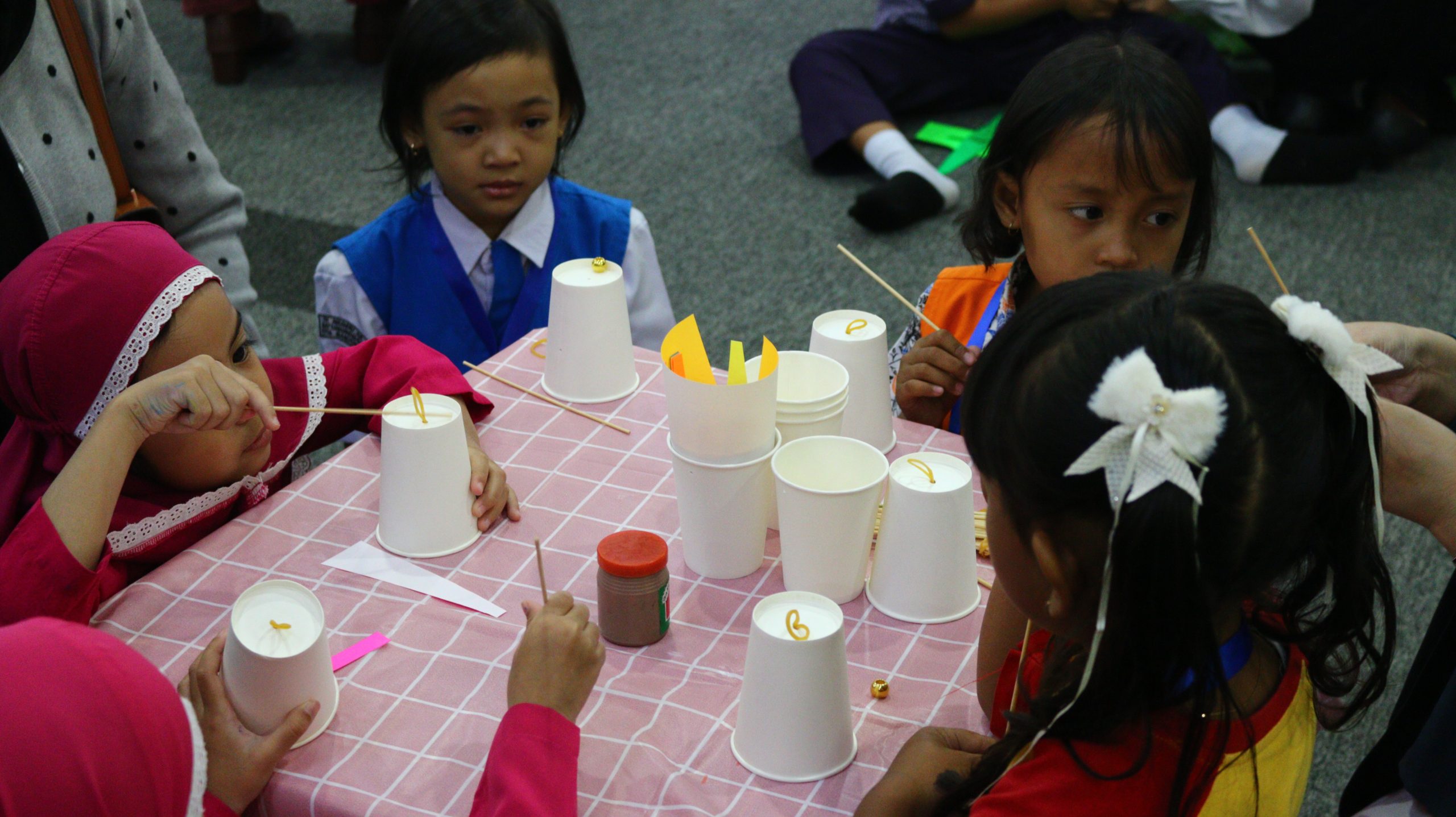
Beyond the seminar sessions, a range of activities was organised for children. A Little Scientist Workshop provided opportunities for children to take part in simple hands-on STEM experiments that encouraged observation, exploration, and problem-solving. Visitors could also explore interactive exhibitions showcasing STEM learning projects and developed by SEAQIS partner schools. Meanwhile, the Kids Corner offered a child-friendly space with a variety of fine motor skill activities, allowing children to learn through play while experiencing STEM in an enjoyable way.
The launch of the STEM Activity Book Series for Early Childhood Education marks another milestone in SEAQIS’s efforts to strengthen STEM education from the earliest years. By providing practical learning resources and fostering collaboration among educators and stakeholders, SEAQIS hopes to support more teachers in creating meaningful STEM learning experiences that nurture children’s curiosity, creativity, and problem-solving skills across Indonesia and the Southeast Asian region.
Writers: Zulfa Mahiratu Marwa and Salsabila Nadhifah
