
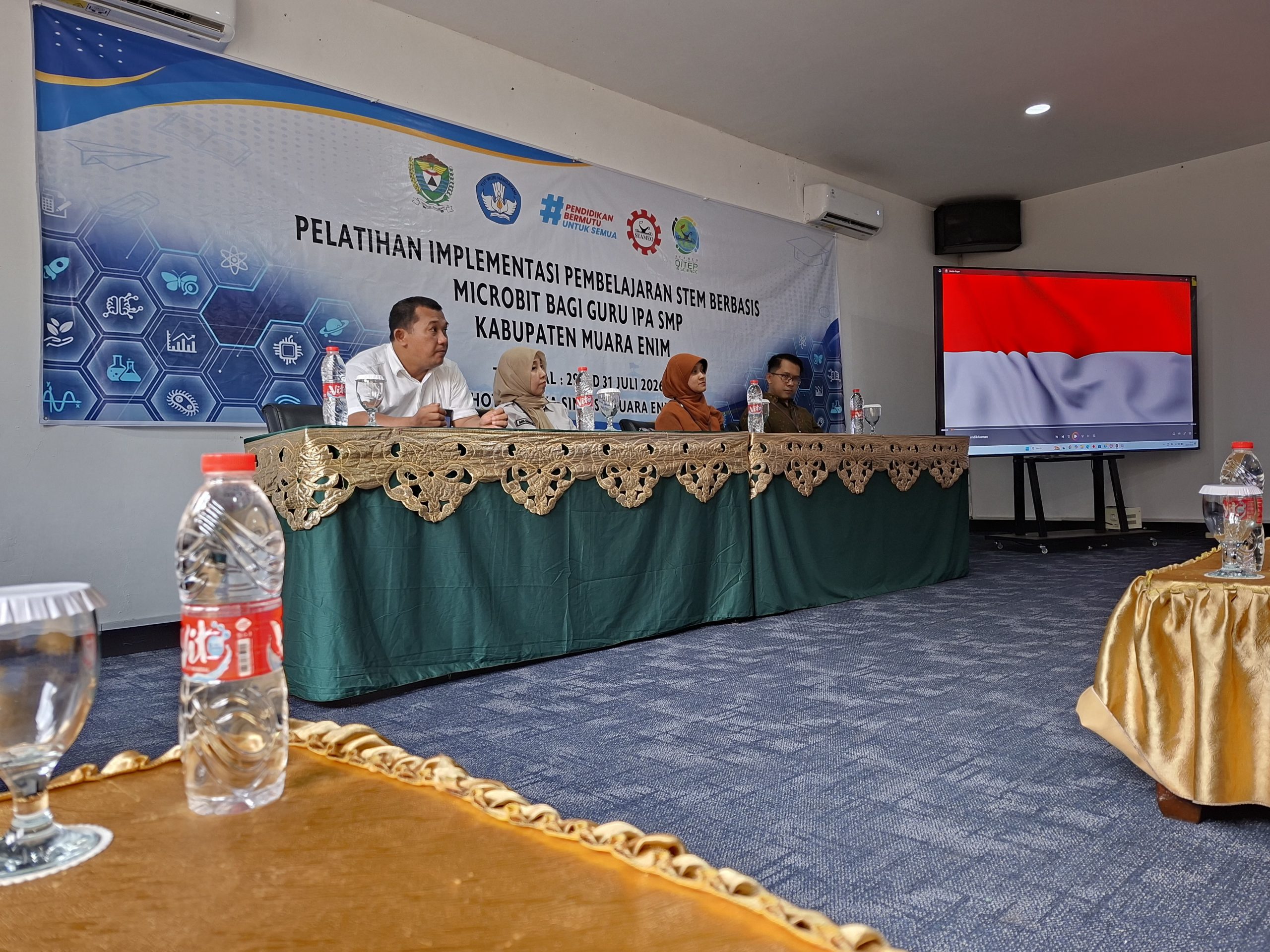
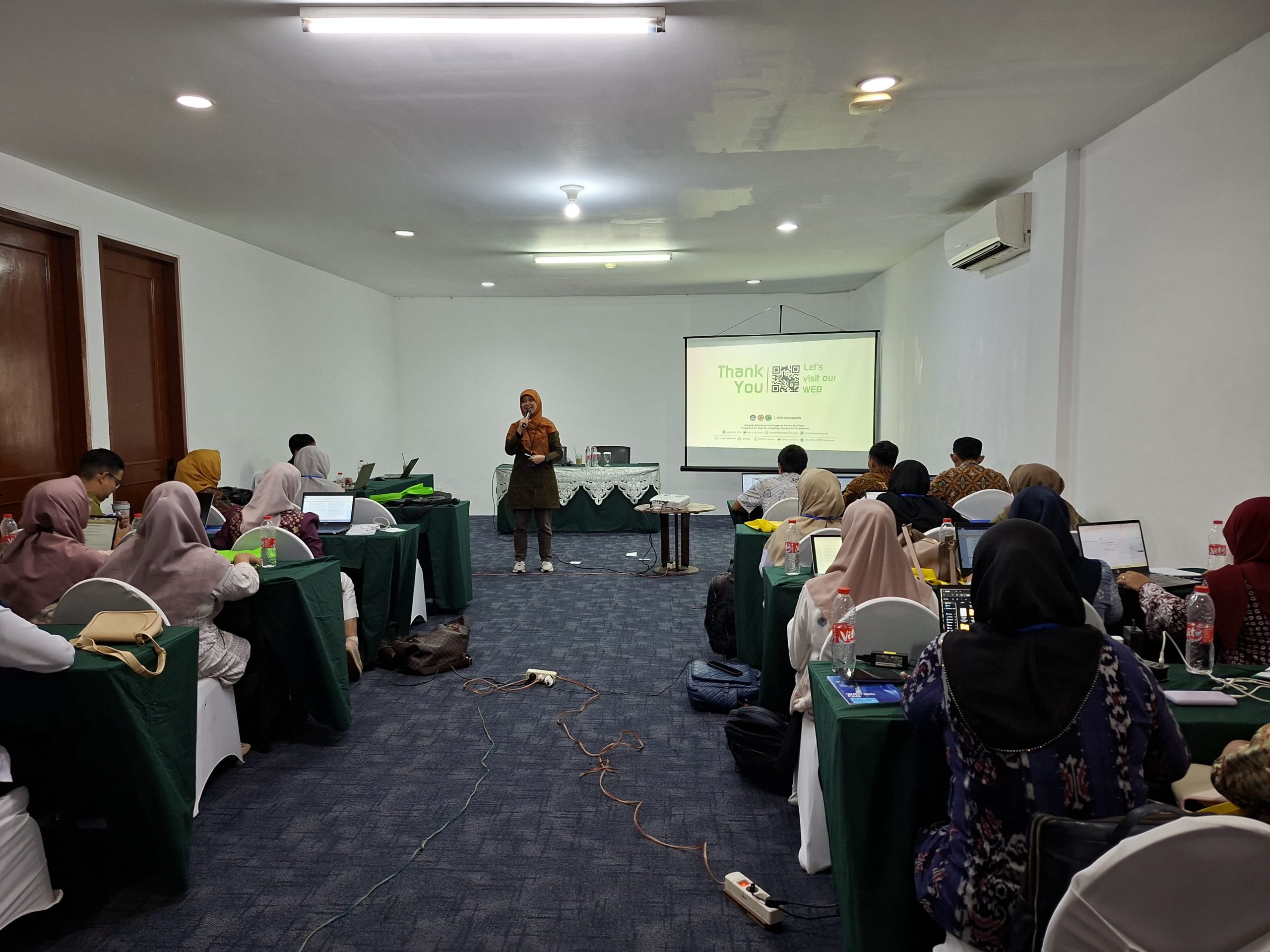
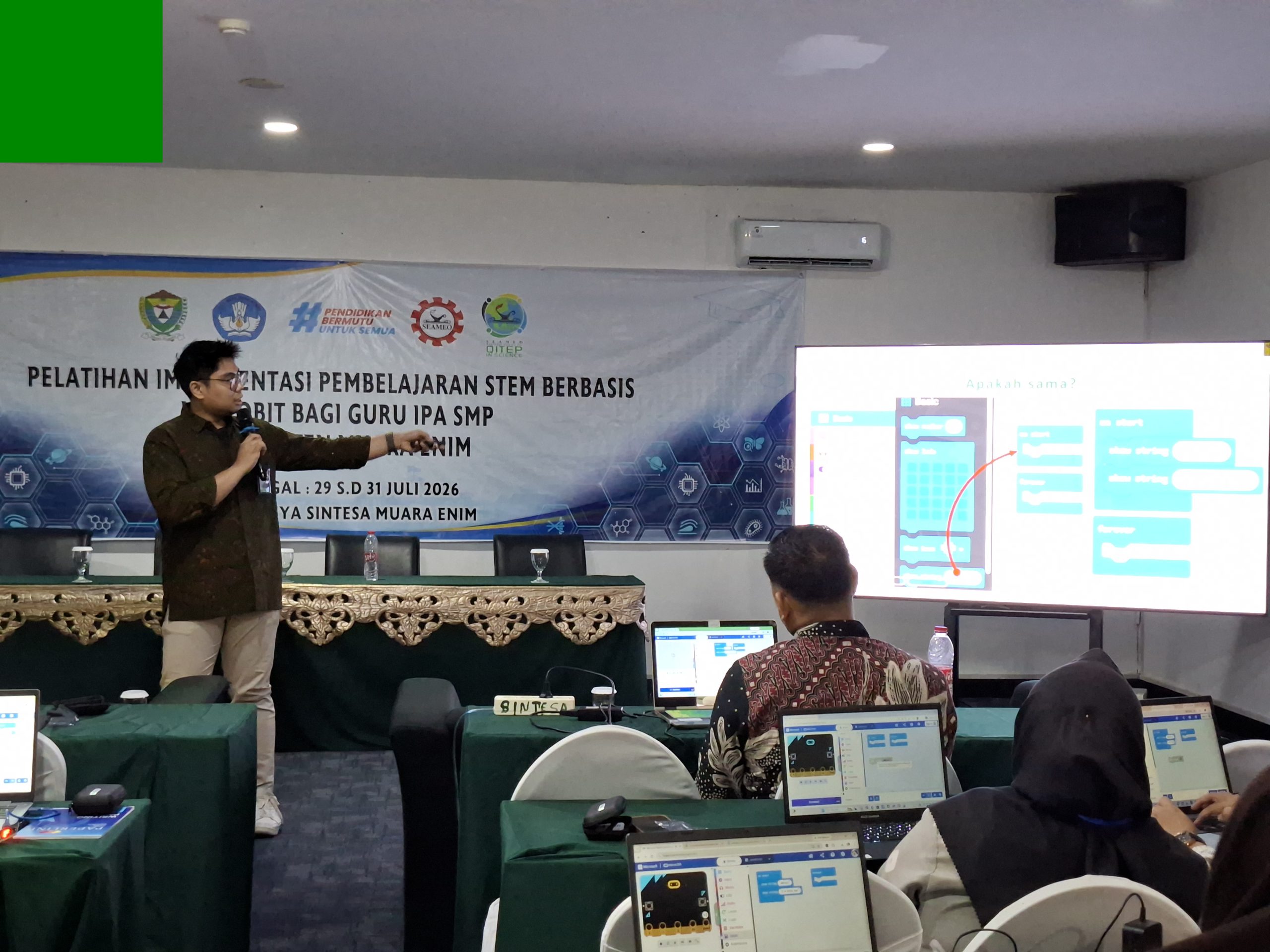
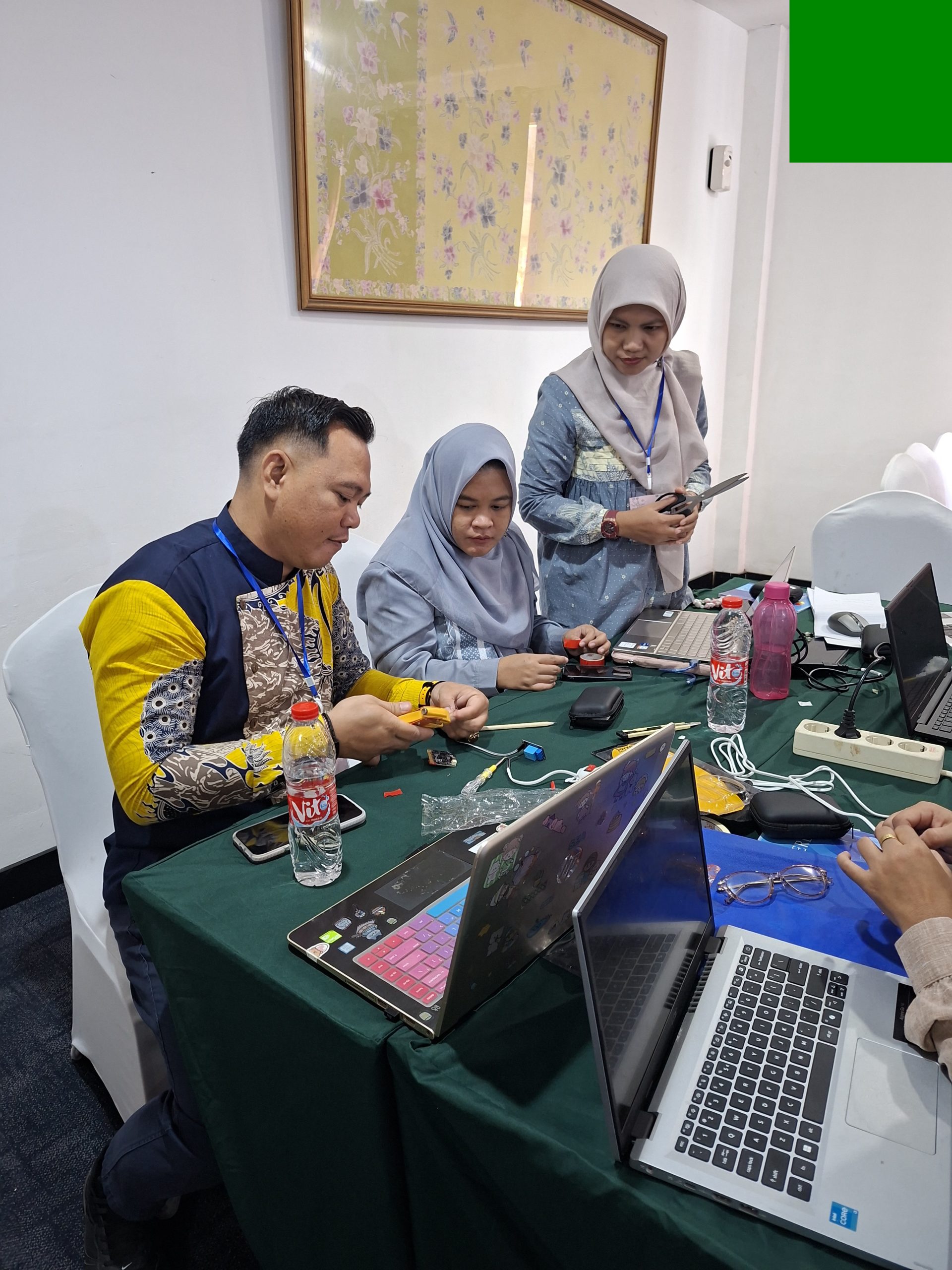
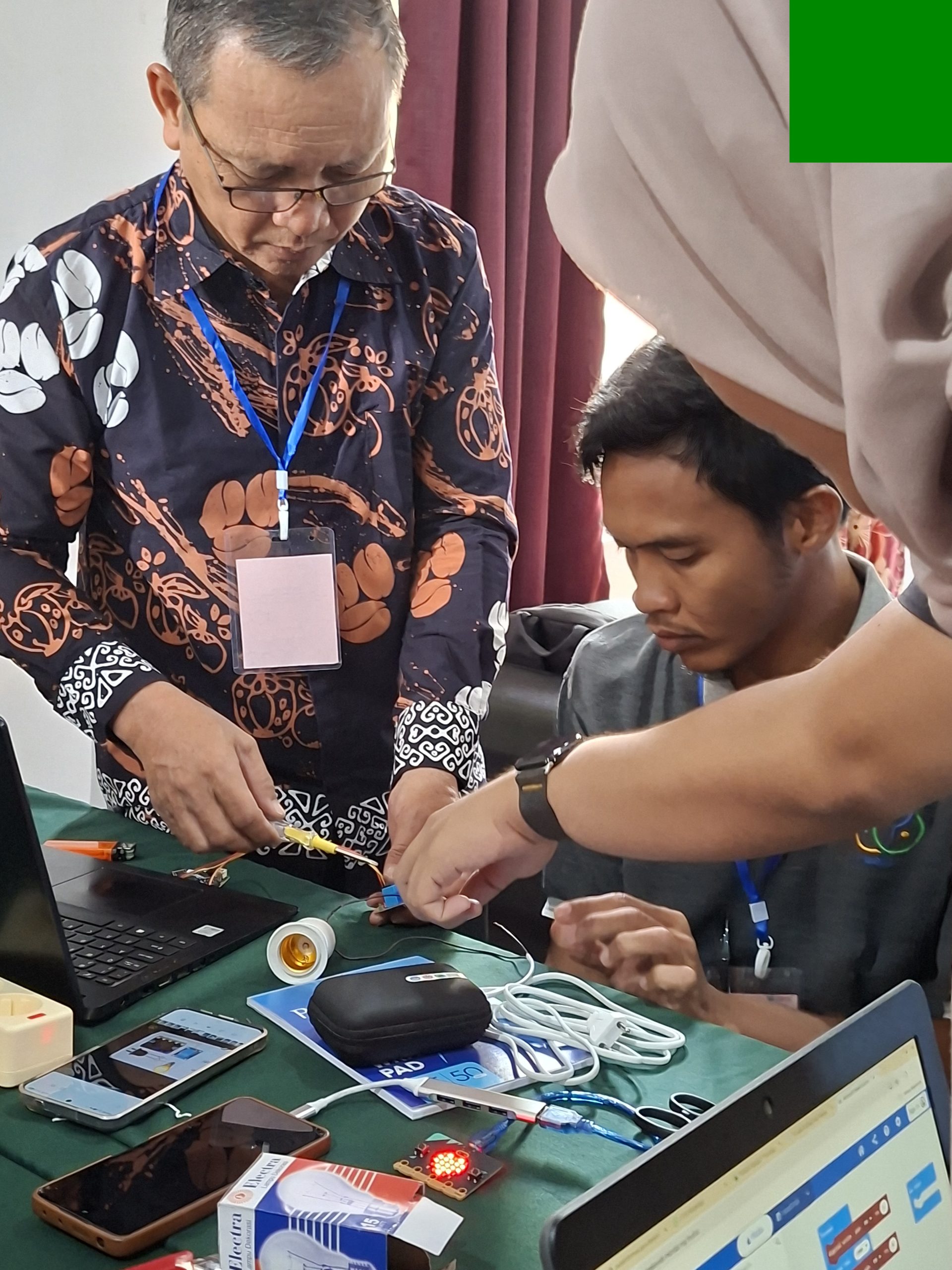
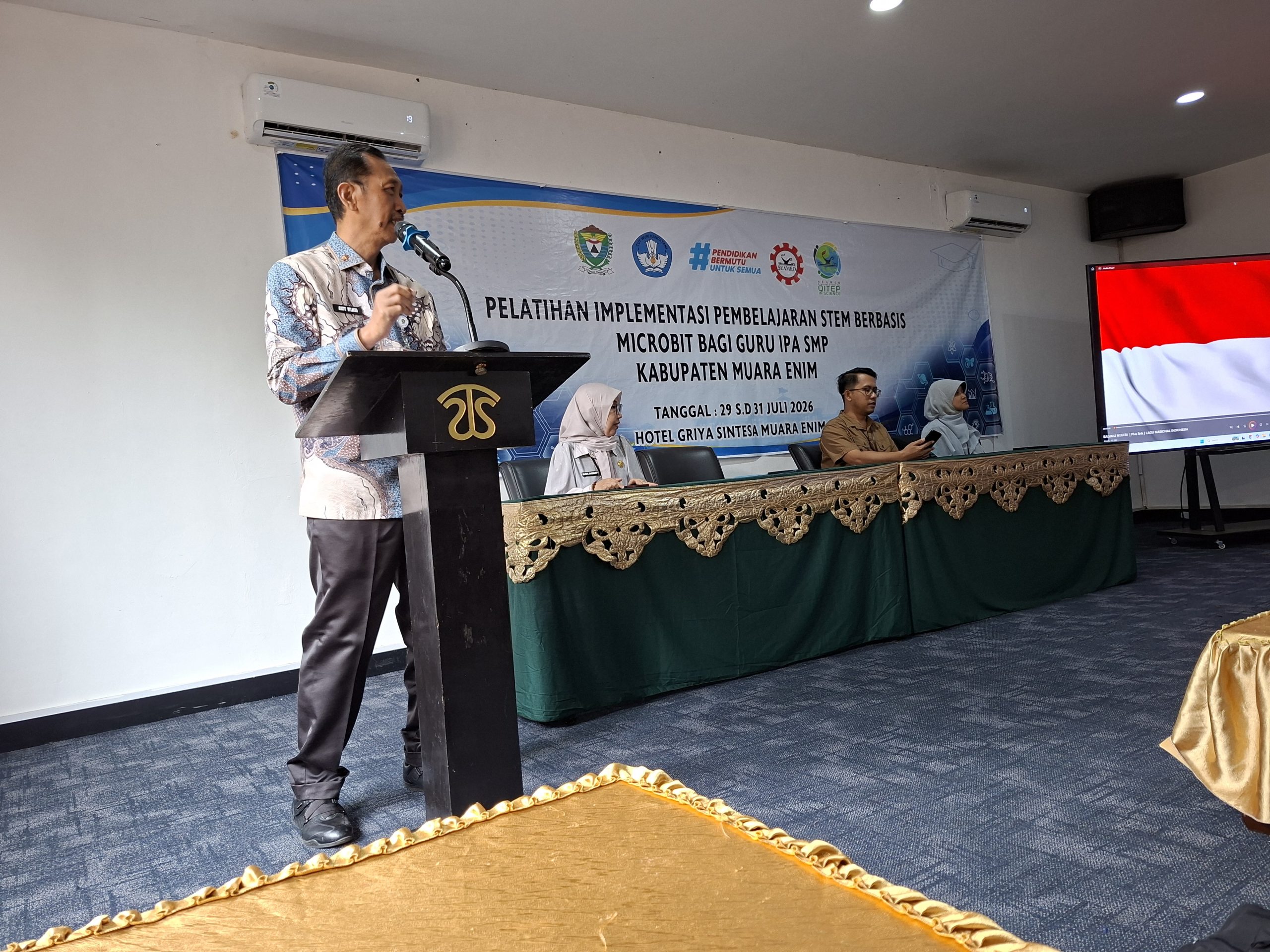
Strengthening the integration of technology into STEM education, SEAQIS brought together 50 junior secondary science teachers from across Muara Enim Regency for a three-day training on micro:bit-based STEM learning. Held from 29 to 31 July 2026 at Griya Sintesa Hotel, Muara Enim, the programme was conducted in collaboration with the Muara Enim Regency Office of Education and Culture and officially opened by Mrs Maya Susanti, S.E., Head of the Division of Development and Personnel.
The training served as a follow-up to the 2025 training on the integration of KKA into STEM learning for junior secondary teachers in Muara Enim. Building on the previous programme, the training focused on strengthening teachers’ knowledge and practical skills in implementing STEM learning integrated with micro:bit in their classrooms.
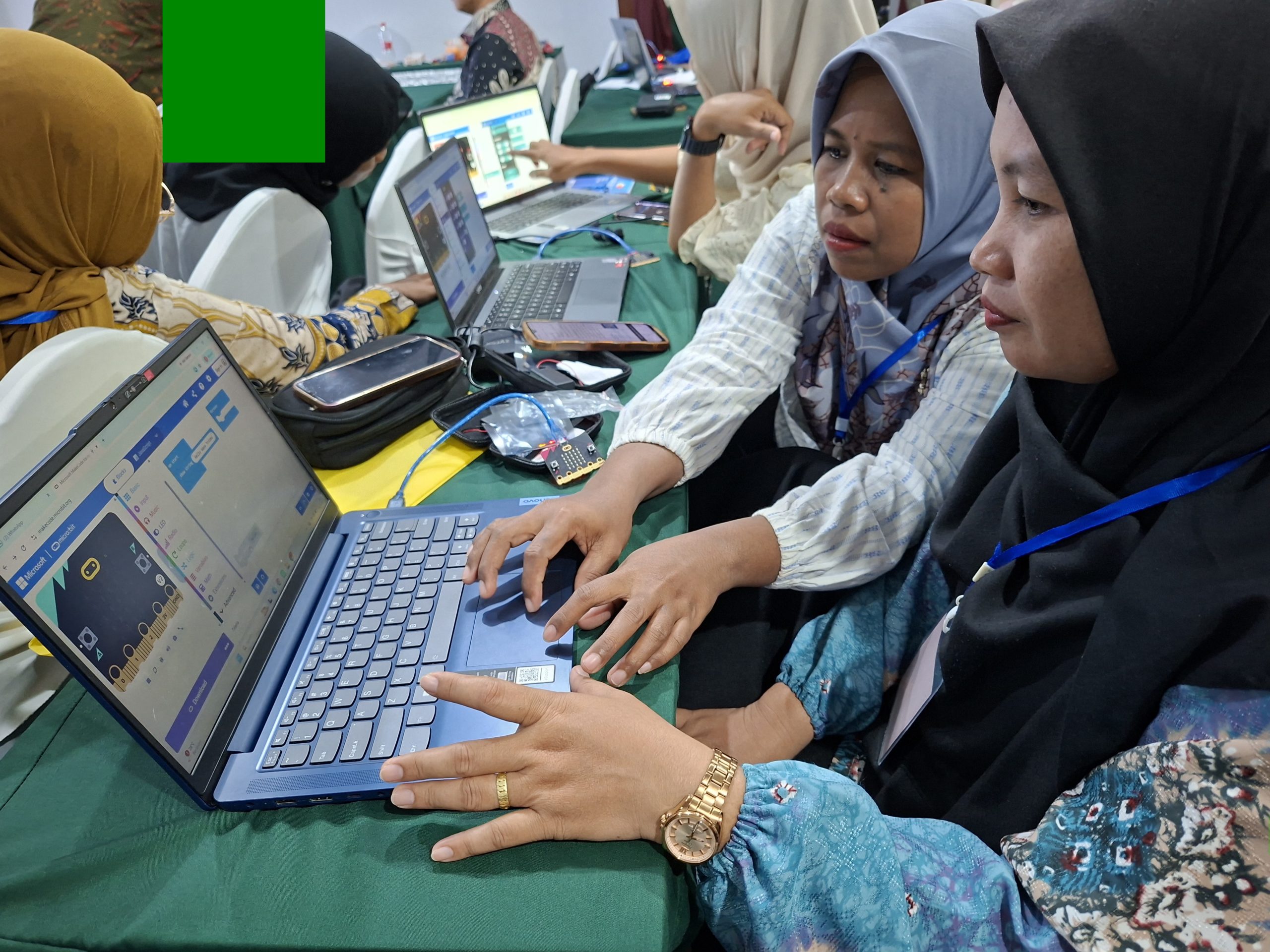
Throughout the training, participants revisited key concepts of STEM learning and explored the use of micro:bit, programming, and basic electrical skills as tools to support technology-enhanced STEM learning. The sessions combined discussions, hands-on activities, and guided practice, allowing teachers to directly experience how micro:bit can be incorporated into science learning.
A key focus of the training was the application of the Engineering Design Process (EDP) in STEM learning. Teachers were guided to identify and analyse contextual problems, formulate problems that are relevant to students’ learning needs, and develop appropriate STEM learning activities. They also practised assembling and programming micro:bit devices using various sensors and additional actuators, strengthening their technical confidence in using the technology for classroom activities.
The training also emphasised the connection between problem identification, learning design, and assessment. With guidance from the facilitators, participants worked on developing STEM learning designs, student worksheets, and assessment instruments that could be adapted and implemented in their respective schools.
By the end of the programme, participants had strengthened their understanding of EDP, developed practical skills in assembling and programming micro:bit, and enhanced their ability to design STEM learning around contextual problems. These experiences are expected to help teachers create more meaningful learning experiences that engage students in problem-solving, creativity, collaboration, and engineering practices.
Through this continued professional development programme, SEAQIS and the Muara Enim Regency Office of Education and Culture reaffirm their commitment to strengthening teachers’ capacity to deliver contextual, technology-supported, and meaningful STEM learning. The programme also marks a continued effort to support the sustainable implementation of STEM education in junior secondary schools across Muara Enim.
Writers: Nurul Khosiyah and Salsabila Nadhifah
